When something goes wrong on the job, you don’t need drama; you need action and answers. This guide reviews some of the most common business carpet cleaning claim scenarios and how to deal with them like a pro.
Learn what kind of carpet cleaning insurance is designed to cover each type of claim, how to respond to each accident, and how to prevent a repeat incident.
Carpet Cleaning Claims: Examples and Risk Management
The biggest carpet cleaner risks involve slip and fall injuries and damage to your client’s property or your own business equipment. Let’s examine five common claim scenarios.
1. The Client Slip and Fall Accident
What may have happened: A client or family member walked across a wet area and lost their balance, or they tripped over a hose or other piece of equipment.
What coverage may apply: General liability or medical payments coverage may apply.
How to respond: If you’re present when the accident occurs, confirm the client or person is okay and contact emergency services if needed. Aid the customer as necessary, and if you’re qualified to do so.
After any immediate injuries or emergencies are resolved, remember to:
- Document incident details, including what happened, the location, and any other relevant information
- Photograph wet-floor or other signage placement and lighting conditions
- Collect witness statements with full contact info, if applicable
- Do not admit or debate fault on site, and report the incident to your insurance right away
Prevention tips:
- Conduct a risk assessment of the areas you’ll be working in to identify potential trip, spill, and other hazards that may cause damage to client property or harm to you, your team, clients, passersby, or pets
- Place cones or signs at entry and transition zones
- Plan or mark routes to keep people off wet paths
- Warn clients ahead of time of slip and fall risks
- Have clients read and sign a liability waiver
2. Discolored or Stained Carpet After Cleaning
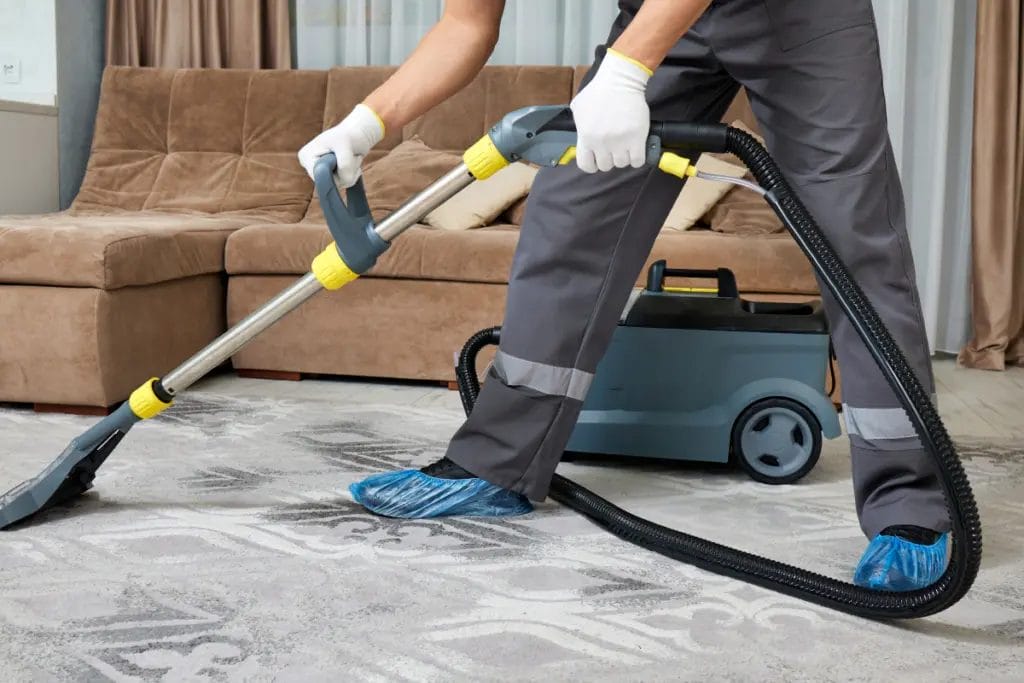
What may have happened: Dye bleed, wicking, or staining caused by an error in solvent or other chemical dilution; use of an overly alkaline solution, or improperly adjusted hot-water extractors.
What coverage may apply: General liability insurance, which applies to damage you unintentionally cause others and others’ property.
How to respond: If you notice or suspect a carpet may be developing discoloration or staining, follow these steps first.
- Stop work, document with photos in natural light and flash
- Save chemical labels, dilution ratios, and test spot notes
- Get the customer’s written statement; don’t promise coverage or payment
- Notify your insurance company
Prevention tips:
- Identify carpet fibers before beginning work to ensure the usage of the right cleaning agents
- Spot-test stains or cleaning agents when applicable to check for colorfastness (test an inconspicuous area like a closet; apply a small amount of cleaner, wait briefly, then blot with a white cloth or paper towel — if dye transfers to the cloth, don’t use that cleaner)
- Pre-treat stains
- Rinse and dry properly
- Log solutions’ pH before and after
- Don’t return furniture to the carpet without proper protections
- Avoid over-wetting by consistently monitoring the amount of water you use
3. Water Damage or Musty Smell Appeared After Extraction
What may have happened: Over-wetting, inadequate dehumidification, or hidden moisture.
What coverage may apply: General liability coverage for potential property damage. However, if there is mold, a specific mold limit or exclusion may apply.
How to respond: If water damage or a musty smell occurs, start by getting moisture readings (pad, subfloor, adjacent areas) with timestamps to create a moisture map. Run air movers or dehumidifiers if possible, and record the equipment and settings used.
Notify the client in writing of the situation and instruct them not to move heavy furniture across damp areas.
Prevention tips:
- Monitor moisture levels with a moisture meter or hydrosensor
- Use air movers as needed
- Block or discourage unnecessary traffic to and from the cleaning area to avoid wicking from baths and kitchens
4. Damaged Furniture, Electronics, and Other Client Property
What may have happened: You bumped into a table and broke a family heirloom, spilled a cleaning solution and stained the baseboard, or an employee accidentally knocked over a television, and it cracked.
What coverage may apply: General liability typically covers accidental damage to a customer’s property.
How to respond: Document (photograph if possible) pre-existing dings and post-incident marks. Record the serial numbers for electronics and gather as many other details as possible about the damaged item.
Inform your insurance company of the incident right away by filing a claim. Be ready to provide them with the details you gathered about the damaged item and accident.
Prevention tips:
- Always pay attention to your surroundings when moving around equipment and customer furniture
- Create a clear and unobstructed path to move cleaning equipment in and out of the area
- Use protective safety devices like painter’s tape, corner guards, and foil or blocks for under table legs
- Move small, fragile, lightweight, or valuable items to a safe area before cleaning
- Don’t remove protective barriers or return furniture to the carpet until it’s fully dried
5. Stolen Equipment From a Van or Jobsite
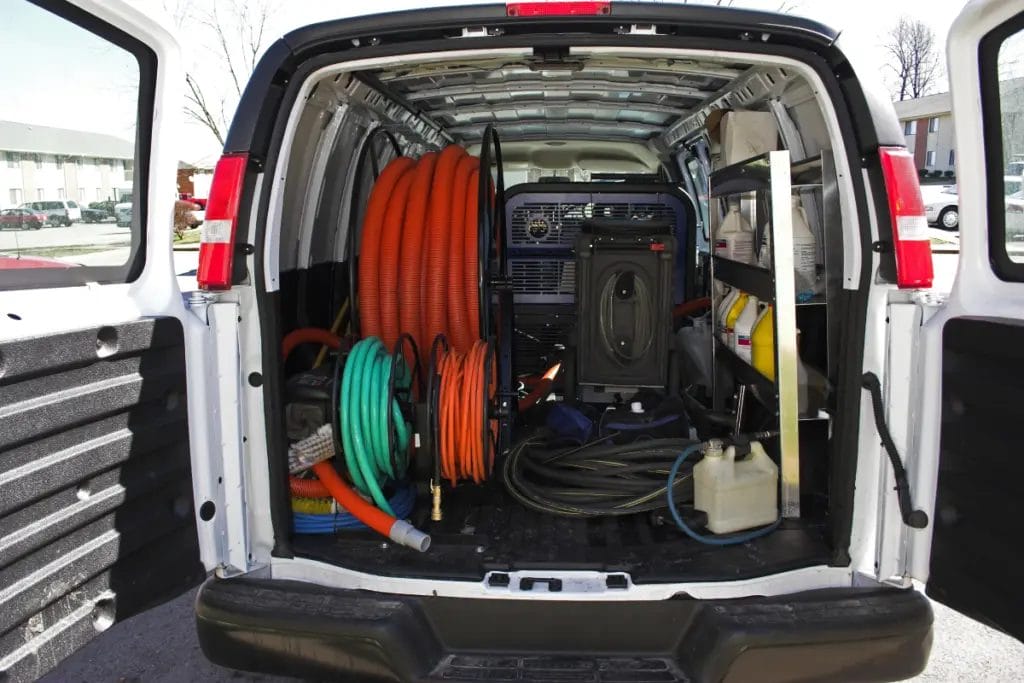
What may have happened: Someone stole your carpet wand while you were loading equipment into your vehicle, or someone attempted to steal your van and ended up breaking the windows, stealing an extractor, and possibly damaging the van.
What coverage may apply: Tools and equipment coverage (aka inland marine insurance) may cover your wands and extractors if they are stolen from a locked vehicle. Commercial auto insurance may cover the damage to your van caused by vandals or thieves.
How to respond: For most theft cases, you’ll need to have a police report to file a claim. You’ll also need to:
- File a police or incident report
- Gather equipment serial numbers, receipts, and other documentation
- Photograph evidence of any forced entry
- Notify your insurance company and provide them with copies of all relevant information and documentation to move the claim along
Prevention tips:
- Use tools like lockboxes and GPS tags (which may help to recover the items if they’re stolen)
- Park your work vehicle near security cameras
- Remove high-value tools from vehicles after hours
- Do not leave equipment unattended
How Do I File a Claim for My Carpet Cleaning Business?
You can file carpet cleaning claims online quickly and easily with Insurance Canopy. Follow these steps:
- Log in to your online user account
- Locate the “Manage Policies” section
- Click “File A Claim”
- Provide the required information
- Submit your claim
To make the claims process easier and quicker, be prepared with the following information:
- Your policy number
- Your contact information
- Contact information for any other parties involved
- Incident details, like the date, time, and location of what happened
- A clear description of the incident
- Photos of the damage (if available)
- The estimated value of any damaged or stolen items
- A police report, including the department name and the responding officer’s info, for theft or vandalism claims
Additional resources for understanding the small business claims process:
Protect Your Business with Carpet Cleaning Insurance
Even with the best safety skills and risk prevention strategies in the business, accidents still happen. The cost of accident claims, especially those involving injury, can also escalate exponentially. Paying for those costs on your own could be devastating to the business you’ve worked hard to build.
Carpet cleaning business insurance is your financial safety net in the event of claims like these. Plus, cleaning liability insurance is often required or requested by your potential clients.
Frequently Asked Questions About Carpet Cleaning Business Claims
How Much Does Carpet Cleaner Liability Insurance Cost?
Insurance Canopy’s carpet cleaning business insurance starts at just $39 per month, or $435 per year. And, 62% of Insurance Canopy cleaners pay less than $50/month.
What Kind of Insurance Do Carpet Cleaners Need?
At a minimum, small carpet cleaning businesses need general liability insurance. General liability insurance is what helps you pay for claims and lawsuits related to bodily injury and property damage you may cause due to your work.
Depending on the scope or size of your business, you may also need one or more optional coverages, like:
Are Employee Injuries a Workers Comp Claim or Liability Claim?
Work-related employee injuries and illnesses are workers comp claims.
Liability claims are for third-party injuries and damages, where third party means others (aka not you or anyone who works for you).