Top 5 Most Common Cleaning Business Insurance Claims
A growing cleaning industry proves that a commitment to exceptional service pays off. However, even in the most meticulous industries, this growth comes with a little chaos.
Let’s explore the most common cleaning insurance claims, so you can keep your business spotless and thriving!
What Are the Most Common Types of Insurance Claims for Cleaning Businesses?
The most common claims faced by cleaning businesses are slips and falls, property damage, and employee-related hazards like theft or injuries. While paying a premium for cleaning insurance can feel like just another expense, it matters most when a big claim hits.
Here are the five most common cleaning business insurance claims we see:
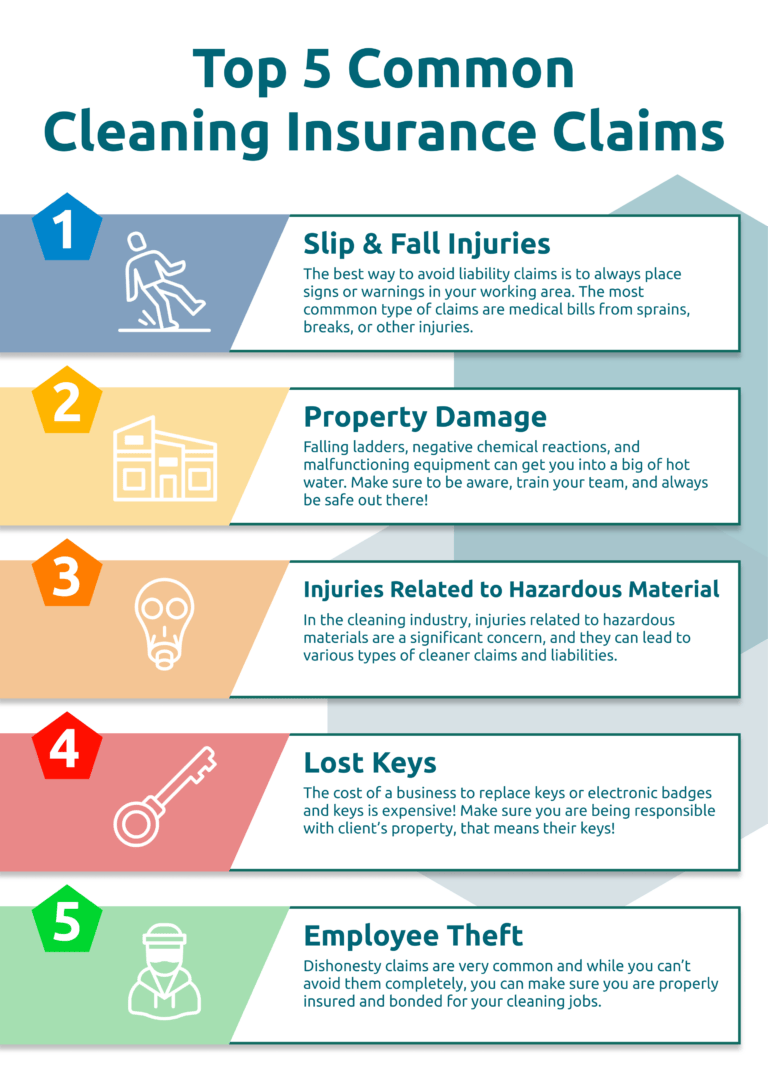
1. Slip-and-Fall Injuries
Slips and falls are common in the cleaning world, and it’s not just slick, wet floors. Vacuum cords and equipment can trip people up, too. Even small accidents can spiral into costly legal battles, and slip-and-fall liability claims can reach tens of thousands once you add up medical bills, lost wages, and legal fees.
Being proactive is your best defense. Train your team to handle equipment safely and spot hazards to prevent incidents. With the right precautions and insurance, you can protect your business from financial risks.
General liability insurance, the base coverage in cleaning business insurance, is designed to cover third-party injury claims. So if a passerby ignores your “wet floor” sign, slips, falls, and needs medical care, this coverage can protect you from having to pay out of pocket.
2. Property Damage
Stepping into a client’s space to work your cleaning magic is part of your job’s daily routine, but it also brings the risk of accidental damage.
Here are a few real examples of property damage claims submitted by Insurance Canopy policyholders:
- A housekeeper reported a rogue piece of equipment hit a client’s wall, leaving a hole
- A residential cleaner used the wrong solution on a piece of furniture, damaging a pricey hutch
- A cleaning professional accidentally spilled cleaning solution down a client’s sink, damaging the pipes
- A janitorial business reported their equipment caused accidental damage to a venue’s floor
- While dusting, a maid accidentally knocked over a bottle of a client’s cologne, shattering it
These scenarios aren’t rare: they’re part of the job and can quickly lead to claims against your business.
Insurance is a safety net for your cleaning business, designed to cover these potential liabilities, so a simple mistake doesn’t become a financial disaster. Securing the right coverage allows you to focus on delivering spotless results while knowing you’re protected.
3. Lost Keys
Do you have regular clients who trust you with keys to their homes, offices, or storage spaces? That’s a big responsibility, and losing those keys can be a real wallet-buster, especially if you’re dealing with commercial properties.
Imagine misplacing a master key — yikes! Replacement costs could skyrocket with a claim, leaving you with business-pausing debt.
Here’s how to keep those keys safe and sound:
- Appoint a key guardian: Appoint a trusty supervisor to handle key distribution at the start of each shift and administer collection at the end. (FYI: If your team is tiny, that key guardian might be you! Get in the habit of placing keys in a secure location.)
- Buy a lockbox: Keep a set of master keys tucked away securely in a lockbox for each client.
- Create a spreadsheet: Create a shared key log spreadsheet. If you house this information digitally, make sure you have encryption software and cyber liability insurance for extra security.
4. Employee Theft
Employee dishonesty is a major concern for cleaning professionals because your staff often works unsupervised in clients’ spaces. If a member of your crew is accused of stealing a client’s belongings, it could lead to significant financial losses.
To protect your business, it’s crucial to review what coverage you have and consider additional insurance or a janitorial bond for extra protection.
For the best coverage against theft, combine general liability insurance with a bond. At Insurance Canopy, you can buy a bond starting at $110/year.
5. Employee Injuries
Most cleaner injury claims happen due to a lack of comprehensive training and safety protocols. Many states require you to carry workers compensation insurance for your crew to help cover the cost of these types of claims.
Here are a few common workers compensation claims to consider when creating your team’s safety plan:
| Employee Injury Risk | What Happens | How To Reduce Risk |
|---|---|---|
|
Strong cleaning agents |
Can cause skin and eye irritation or chemical burns if handled incorrectly |
Train staff on proper dilution and handling. Require gloves and eye protection. Store chemicals safely and label containers. |
|
Ladders and step stools |
Falls can lead to strains, sprains, fractures, or head injuries |
Use sturdy, rated ladders. Train on safe setup and three-point contact. Don’t overreach. Inspect equipment regularly. |
|
Repetitive tasks |
Repetitive motion (like vacuuming or mopping) can lead to back, shoulder, and wrist injuries over time |
Rotate tasks when possible. Encourage micro-breaks. Teach proper lifting technique. Use lightweight or ergonomic tools. |
Most Common Claims Against Cleaning Businesses
Since 2020, the average payout for an Insurance Canopy cleaning business liability claim was $1,562.
Our highest payout for a claim was $8,875 for an incident involving damaged floors. The state with the most claims submitted was California, accounting for over 37% of claims.
According to our internal data, property damage was the most common general liability claim, often caused by spills and chemical damage (29.2%), broken windows or glass (25%), and scratched or damaged surfaces (20.8%).
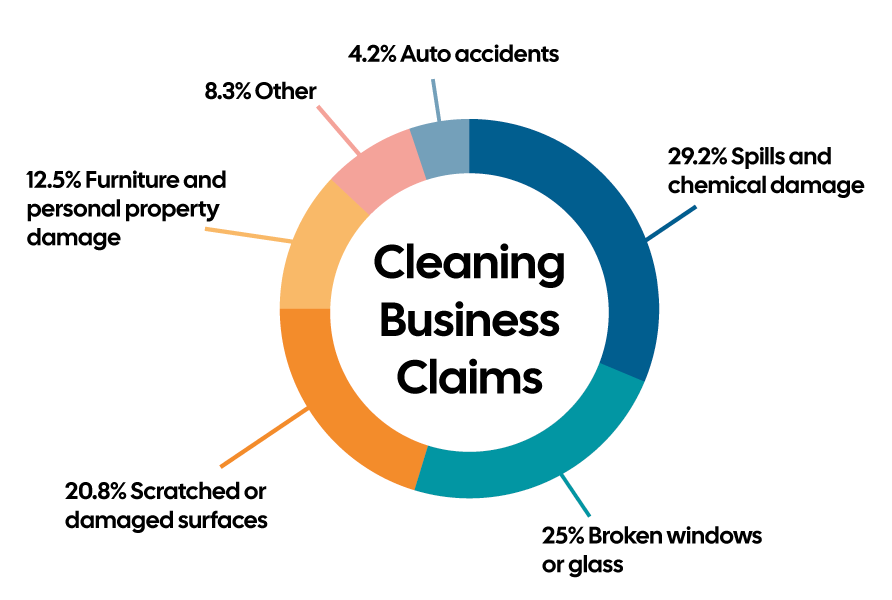
*Based on Insurance Canopy claims data from 2020–2025
Real Examples of Cleaning Insurance Claims We’ve Covered
Tanner was leaving a successful carpet-cleaning job when he accidentally spilled cleaning solution on a silk rug, causing a chemical burn that ruined it.
While cleaning a glass shower door in her client’s bathroom, Maria closed the door with too much force, and it shattered.
After a routine window-cleaning service, a homeowner reported that Xavier’s team scratched the bay window in her kitchen, requiring it to be replaced.
How Do I File A Cleaning Business Claim with Insurance Canopy?
Filing a cleaning claim with Insurance Canopy is simple and fast. After you secure a policy with us, you’ll receive access to an online dashboard to manage your policy and file a claim. Here’s the fastest way to get started:
- Log in to your dashboard
- Click “Manage Policies”
- Click “File a Claim” and share your info
Once you’re done, a claims adjuster will get in touch to assist you. They’ll be with you every step of the way to ensure the claims process goes smoothly.
If you’re having trouble submitting a claim, our support team of licensed agents is here to help.
Get Instantly Insured Online with Insurance Canopy!
Protecting your cleaning business with the right coverage is just a click away. Insurance Canopy provides a 100%-online experience, so you can get comprehensive coverage within minutes!
Don’t wait for an accident on this list to blindside you. Stay safe and shield your business with Insurance Canopy.
FAQs About Cleaning Businesses Insurance Claims
Does Filing a Claim Impact My Insurance Premiums?
Filing a cleaning insurance claim can affect your premiums. If you file multiple claims, insurers may view your business as higher risk and raise your rates.
To help keep premiums low, reduce day-to-day risks and file claims only when it makes financial sense for your business, especially when filing your first cleaning claim.
How Do I Avoid Cleaning Business Risks That Lead To Claims?
To avoid cleaning business risks that might lead to claims, focus on three things: training, equipment, and safety protocols. These steps reduce common issues like property damage, slip and fall injuries, and chemical accidents:
- Teach safe chemical use, including correct dilution, proper storage, and never mix products.
- Use surface-specific techniques to avoid scratches, stains, and breakage.
- Match the tools to the job and maintain them to reduce damage and trip/fall hazards.
- Require PPE and enforce it (gloves, masks/respirators, eye protection when needed).
- Follow simple job checklists and use reminders like wet-floor signs and ladder safety rules.
Can I Get Cleaning Business Insurance After An Accident Happens?
If an accident happens while you’re on the job and you don’t have insurance, you can still get cleaning business insurance depending on the severity and number of losses you’ve had.
However, a new policy won’t cover accidents that happened before you bought the policy or before your coverage start date. Getting insured now helps protect your business from future accidents and costly claims.