

Search for “consultant salary” and you’ll find wildly different answers — $70k here, $200k there, and hourly rates that don’t seem to add up. No wonder so many aspiring consultants are left scratching their heads!
Want to know how much consultants make, whether you’re charging enough, or whether starting a consulting business could be right for you? In this article, we’ll:
- Bust common myths about consulting wages (and explain why they exist)
- Compare average consulting rates for different types of consultants
- List the best and worst states for consultant pay
- Break down the factors that influence how much consultants make
- Learn how to set your rates
- Give tips for boosting your earnings
- Discuss protecting and future-proofing your consulting business with insurance
Let’s crunch some numbers.
Quick Facts – Average Consultant Salary in the US
- National benchmark: ~$100,000/year
- Consultant average salary by state: $77k to $117k
- Consultant salary range by seniority: $65,224 to $500,000/year
- Average consultant salary by industry: $40,000 (low-end independent consultants) to $500,000+ (senior MBB consultants and successful independent business strategists)
Pay information gathered from ZipRecruiter, Indeed, and Bureau of Labor and Statistics as of September 2025.
Myths vs Realities About How Much Consultants Make
There’s a good chance that you’ve heard (or even believed) one of these myths about how much consultants earn. While it’s easy to see the high-profile success stories and start dreaming, there are a few essential things to know if you’re considering becoming a consultant.
Myth
❌ All consultants earn six figures
❌ Hourly rate x 40 hours = take-home pay
❌ Bigger firm = better pay
❌ Independent consultants earn less
- Consulting income is highly uneven: Some types of consultants charge $30/hour, others $1,000+/hour — it depends on their reputation, demand, field of expertise, location, and whether they’re independent or work at a firm.
- Utilization rates (billable hours vs. total working hours) tell the real story: Sales, admin, travel, pitches, and gaps between projects are often unpaid, so the average independent consultant may only get paid for 50-70% of the hours they work. 68% was the average billable utilization for a management consultant in 2023.
- A bigger firm may not equal a bigger paycheck. Many consultants dream of making bank working in the Big 4 (Deloitte, PwC, EY, KPMG) or MBB (McKinsey, Boston Consulting Group, or Bain & Company). However, the lifestyle costs are steep, and a boutique firm or independent may charge similar, premium prices with lower overhead.
- Going solo can mean bigger risk and bigger reward. While you’ll be paying for your own healthcare, leave, and retirement fund, successful independent consultants have high earning potential if they build a strong brand. Your bad years may be worse, but your good years could be better than those with a more stable consulting firm job.

How Much Do Different Types of Consultants Make?
The average consultant salary is around $100k, but the actual pay range dips and soars dramatically depending on several factors. What that should tell you: there’s more to the story.
Average earnings aren’t enough to know how much you’ll make as a consultant. Accurately gauging your earning potential means understanding different types of consulting specialities and firms. Let’s look at some annual earnings head-to-head.
Independent Business Consultant
Business owners or freelancers who sell their consulting services
- Average annual earnings
- $49k to $82k (average)
- $100k to 200k+ (established strong brand)
- Typical billing rate
- $30 to $400/hr (varies widely by industry and reputation)
- Hidden costs
- Unpaid sales and admin time
- Inconsistent work
- Self-funded benefits
- Paths to earning more
- Focus on a high-value niche
- Build your brand with online courses & thought leadership
- Shift to retainer pricing
Boutique/Specialist Firm Consultant
Consulting firms of any size with a narrow focus of expertise in a specific consulting niche
- Average annual earnings
- $95k to $120k (average)
- $200k+ (niche experts)
- Typical billing rate
- $150 to $500/hr (specialists earn the most)
- Hidden costs
- Intense, frequent marketing to build brand recognition
- Must prove credibility
- Long sales cycles
- Paths to earning more
- Develop deep, niche expertise
- Build a strong brand
- Shift to retainer pricing
- Expand into training or workshops
Big 4 Consultant (Deloitte, PwC, EY, KPMG)
Corporate accounting, strategy, technology, risk management, compliance, finance, management, and organizational consulting for Deloitte, PwC, EY, or KPMG (the Big 4)
- Average annual earnings
- $80 to -$150k (junior)
- $250k to $400k (senior, partner)
- Typical billing rate
- $150 to $400/hr
- Hidden costs
- Slow promotion ladder
- Company politics
- Uneven work-life balance
- Paths to earning more
- Move into popular niches (cybersecurity, risk, AI)
- Build your reputation to speed up promotion
Top-Tier Management Consultant (MBB)
C-suite strategy, business, operating system design, performance, management, or healthcare consulting for McKinsey, Boston Consulting Group, or Bain (MBB)
- Average annual earnings
- $150-$250k+ (junior to mid-level)
- $500k+ (partners)
- Typical billing rate
- $200 to $600/hr (junior to mid-level)
- $1,000+/hr (partners)
- Hidden costs
- Burnout risk (60-80 hours/week often reported)
- Heavy travel
- Pressure to bring in revenue
- Paths to earning more
- Pursue partner track
- Specialize in hot industries (tech, healthcare, sustainability/ESG)
- Publish thought leadership
Marketing Consultant
Advises clients on marketing strategy, branding, competitors, and audiences; develops marketing campaigns; measures marketing performance and analytics
- Average annual earnings
- $50k to $100k (freelancers)
- $120k+ (strong niche or agency)
- Typical billing rate
- $40 to $150/hr (average)
- $200 to $300+/hr (high-paying niches)
- Hidden costs
- Marketing costs
- Constantly proving your ROI for clients
- Project-based work
- Competitive field requires high investment in marketing and client acquisition
- Paths to earning more
- Specialize in areas where ROI is easy to prove (performance marketing, CRO)
- Make your services into products
- Build a team or agency
Design Consultant
Offers advice, strategy, and solutions for the aesthetics or functionality of client projects — anything from website UX to graphic, fashion, or interior design
- Average annual earnings
- $50k to $100k (freelancers)
- $120k+ (design strategists)
- Typical billing rate
- $40 to $150/hr (average)
- $200 to $300/hr (high-end)
- Hidden costs
- Often undervalued by clients
- Pressure from freelancer competition to lower pricing
- Paths to earning more
- Position yourself as a design strategist (not just an executor)
- Move into hot fields like UX research or brand experience strategy
Healthcare Consultant
Advises healthcare organizations on organizational structure, finances, health technology, patient care, workflows, or regulatory compliance
- Average annual earnings
- $55k to $80k (typical range)
- $150k+ (major firms and senior roles)
- Typical billing rate
- $31 to $250/hr
- Hidden costs
- Ongoing education to stay updated on laws and regulations
- High liability risk for lawsuits
- Paths to earning more
- Expertise in high-demand areas (digital health, pharma, insurance, operations experts)
- Long-term hospital or insurer contracts
HR Consultant
Provides suggestions and solutions to businesses to improve management systems, performance review, recruitment and retention, labor law compliance, training, and more
- Average annual earnings
- $60 to $110k (average)
- $120k+ (experienced HR tech and DEI specialists)
- Typical billing rate
- $75 to $200/hr
- Hidden costs
- Pressure to show impact on work culture
- Skepticism from some leadership
- Project-based work tied to corporate HR cycles
- Paths to earning more
- Specialize in an in-demand field (like HR tech or DEI strategy)
- Build scalable training programs
- Target large enterprises
Education Consultant
Offers guidance to improve educational outcomes for students, schools, and families, including edtech, curriculum, teacher training and support, or policy and strategy advice
- Average annual earnings
- $50k to $100k (average)
- $120k+ (universities and edtech firms)
- Typical billing rate
- $50 to $150/hr
- Hidden costs
- Educational funding cycles can affect stability
- May rely on grants
- Project-based and variable
- Paths to earning more
- Position yourself as an educational strategy advisor
- Focus on areas like edtech and policy reform
- Publish thought leadership for greater brand recognition
IT Consultant
Advises businesses on using tech to achieve their goals, including cybersecurity, data management and infrastructure, software performance, AI adoption, training, and more
- Average annual earnings
- $70k to $130k (average)
- $150k+ (senior or cloud, AI, and cybersecurity specialists)
- Typical billing rate
- $75 to $250/hr
- Hidden costs
- Certification and continuing education costs to upskill for evolving tech
- Demanding projects and expectations
- High competition requires higher commitment to marketing and networking
- Paths to earning more
- Specialize in high-demand niches
- Build recurring service contracts
- Publish thought leadership
Consultant pay ranges are the average of at least two (2) reporting sources per consultant type in Sept. 2025. Wage data from Salary.com, Indeed, ZipRecruiter, Glassdoor, Zippia, The Ladders, Velvet Jobs, Management Consulted, Entrepreneur Magazine, BusinessBecause, Yahoo Finance, and Wall Street Oasis.
Which Consulting Careers Balance Pay & Stability?
Different consulting jobs have their own trade-offs in terms of pay, lifestyle, and demand reliability. Here’s how different consultant niches and business types stack up.
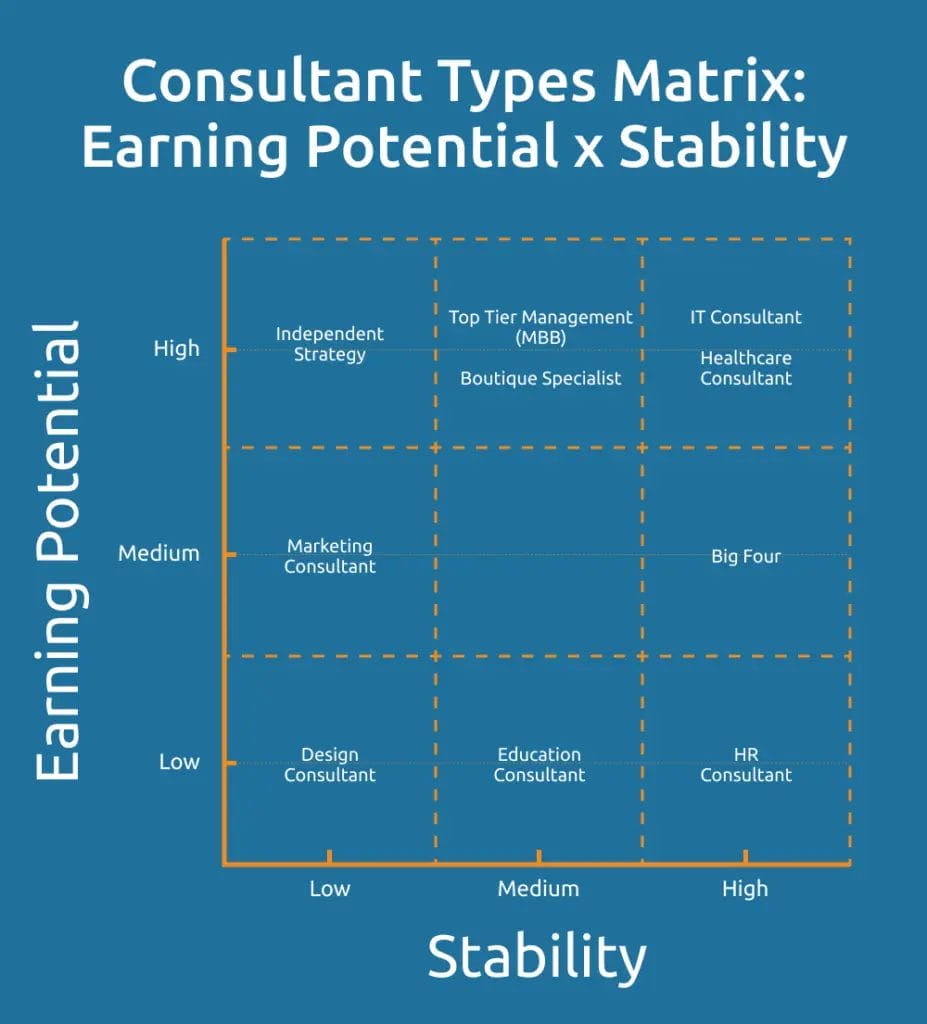
Stable with high earning potential: IT, Healthcare
People will always need experts in technology and healthcare to guide their companies safely forward. Demand is high, the flow of projects is steady, and specialists in popular areas can make top dollar in consulting. However, keep in mind that both require constant upskilling and continuing education to keep commanding top dollar.
High upside but risky: Independent, Boutique, MBB
Consulting is a balance of risk and reward. For example, in the strategy field, independent consultants have total freedom and unlimited pay potential, but their project pipeline can be volatile. An MBB strategy consultant combines great pay with long hours and high pressure, while a boutique firm consultant falls somewhere between the two.
Stable with moderate pay: Big Four, HR
Defined salaries in Big Four companies and recurring HR work on predictable corporate cycles makes these two specialities a reliable choice. Big Four hours can be brutal over the long-term, though, and HR consultants will need to constantly prove their return on investment (ROI) to maintain clients.
Lower pay ceiling and varying demand: Education, Design, Marketing
Passion for the work is important for consultants in creative fields. Competition is fierce, which can lead to pressure for lower rates, and pay in educational consulting can be tied to strict school budgets and grants. You may also see wait time between projects, but lower stress and hours tend to allow for a better work-life balance than higher-risk, higher-reward specialties.

Factors That Affect How Much Consultants Earn
We’ve already hinted at things that influence how much consultants make per hour, but let’s break them down further.
1. Experience and Career Progression
Your consulting rates can (and should) go up as you gain expertise, client trust, and success stories. If you work in a consulting firm, your pay will also scale as you move up the corporate ladder. The national average consulting salaries by position (not including bonuses, which spike senior-level consulting wages even higher) are:
- Associate: $80,000
- Consultant: $130,000
- Principal: $140,000
- Partner: $158,000
- Senior Partner: $200,000
- Director: $250,000
As always with consultant pay, that’s a big range. To find what’s realistic for you, research consultants who do what you do. Check their pricing to collect a range of hourly, project-based, and retainer rates, then arrange them based on the consultant’s experience.
2. Industry Niche or Specialization
Specializing in high-demand, high-return areas — like healthcare, cybersecurity, AI, or financial compliance — lets you charge premium fees. The more value your service brings in for your client, the more you can charge as a highly qualified specialist.
But don’t just choose any consulting niche with this year’s most popular buzzword. Think about niches where you excel, and look for the subject matter experts that earn the most in your area. For example, if you’re a web design whiz, you can maximize your earning by focusing on popular fields like UX strategy.

3. Firm or Business Type
Working at top-tier firms (like MBB or the Big 4) typically means a higher base consulting salary and bonuses. Highly specialized boutique firms and freelance consultants have greater variability — some may earn more, others less — based on reputation and niche.
Pro tip: Anytime you search something like “how much do consultants make per hour”, check where the salary data comes from in your source. Wage data from huge firms tends to skew average salaries higher than what the average consulting business can expect to earn.
4. Billing model
How consultants charge their clients matters, and may change over time as you gain experience and build your client base:
- Hourly rates are straightforward but limited by capacity. Basically, you only have so many hours in the day. Independent consultants who bill by the hour often end up working 60+ hour weeks to make up for time spent running their business or gaining new clients between doing their paying, billable work.
- Fixed project fees can offer more flexible income (if you gauge them right). Charging by the project lets you build some of your overhead costs (like marketing, travel, or unpaid pitches) back into your price. But you’ll need to accurately estimate the scope of the project, the resources you need, and completion time to profit.
- Retainers build predictable income. Established consultants often charge a retainer (usually a monthly fee) for their ongoing advice and services as long as the retainer lasts. Big clients may move from project pricing to a retainer if they like your work and want to have you around on an as-needed basis.
- Performance-based fees and products widen earning potential. Other consultants work for a cut of the profits from their project, or they develop and sell online courses, books, or training for passive income. If you work on high-earning projects or have strong brand recognition, these can be easy ways to make more from consulting.
5. Education & Certifications
Advanced degrees (like an MBA or PhD) or a formal certification in your field (for example, PMP certification or Six Sigma) can let a consultant charge higher fees. Degrees are especially important if you work in a consulting firm, since promotions may be tied to a degree.
Pro tip: Not sure which credentials or programs might help you get ahead? Check out our list of five consulting certifications that can show your expertise to clients.
6. Geographic Location
How much consultants earn also varies based on location. Major metro areas often come with better rates due to higher living costs and market demand. As online consulting continues to grow in popularity, you may see location-based pay start to shift.
Geographical hubs for businesses in your industry can also command higher consulting rates. For example, tech companies tend to concentrate in the Bay Area, Boston, and New York, though growing tech clusters in Seattle and Austin could also mean better rates (and lower travel costs) for local consultants.
How Much Consultants Make by State: Which States Pay Consultants The Most (& the Least)?
10 Highest Paying States for Consultants
- Washington: $117,139
- District of Columbia: $116,873
- New York — $113,151
- Massachusetts — $112,953
- Alaska — $111,383
- Vermont — $109,967
- North Dakota — $109,432
- Oregon — $109,350
- Colorado — $108,753
- Hawaii — $107,455
10 Lowest Paying States for Consultants
- Florida — $77,289
- West Virginia — $80,069
- Arkansas — $85,523
- Georgia — $87,330
- Louisiana — $88,441
- Kentucky — $89,828
- Michigan — $90,145
- Kansas — $92,240
- Alabama — $93,743
- Tennessee — $93,870
|
10 Highest Paying States for Consultants
|
10 Lowest Paying States for Consultants
|
|
Data gathered from ZipRecruiter Sept. 2025
Takeaway: Consultants make more money in coastal and highly urban states due to greater demand and higher cost of living. However, areas with strong industry hubs may break the pattern and offer high pay to attract top talent. States with more agriculture than industry or smaller metro areas usually have the lowest consulting rates.
How to Set the Right Consulting Pay Rates
So how much should you charge if you’re setting your own consulting rates? Here are a few good rules
Find the Hourly Rate for Your Industry
Many new consultants transition from their day job as an employee to opening a consulting business with the same focus and services. This can give you an easy starting point for setting consulting rates.
- Start with your previous annual salary
– Let’s say you made $100,000. - Divide by 50 for your previous weekly salary
– $100,000 / 50 = $2,000 - Divide by 40 for your previous hourly wage
– $2,000 / 40 = $50 per hour
Account for Utilization Rates
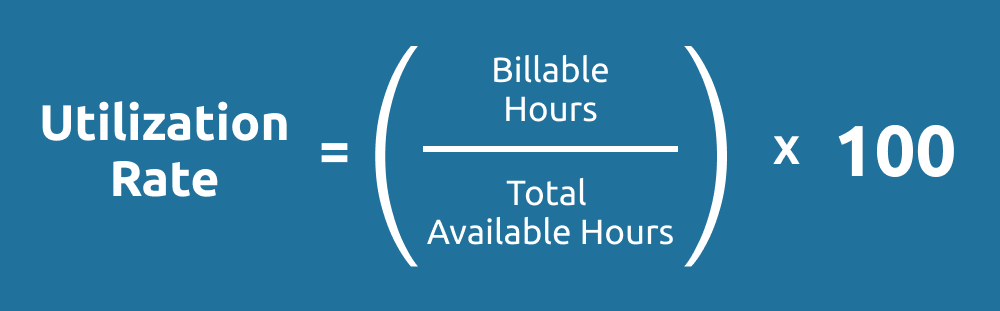
But freelancers can’t bill every hour — admin, advertising, and just running your business takes time. Your utilization rate is the percentage of working hours you spend on tasks for this client’s project.
With a 70-80% utilization rate (considered the industry gold standard by many consultants), you’d actually need to charge $63-$71/hour to net $100,000 take-home.
You can calculate your utilization rate with this easy formula.
Add the Cost of Doing Business
But what about the costs you haven’t covered yet? You’ll need to account for self-employment costs like overhead, taxes, benefits, insurance, downtime between jobs, and profit margin — the average profit margin for an independent consultant is 20-30%.
Pro tip: To cover all your costs and account for your time, consulting coaches often recommend charging 2-3x the hourly wage of an employee doing a similar job.
So, a $100,000 salaried role ➡️ $100 to $150/hour consulting rate.
Once you’ve built credibility, that might translate into $10,000+ per one-month project
Strategies for Boosting Your Consulting Income
As your business grows, expect to continue adjusting your strategy to scale with you. A different pricing model, new service, or larger staff could help you take on bigger projects or reach new audiences. Consider these ideas for earning more:
- Identify and focus on high-demand, high-margin niches for your niche.
- Level up your education or certification credentials to score bigger contracts in more highly paid fields
- Shift to retainers or project package rates instead of hourly pay for more stable work
- Build thought leadership content (for example, publishing blogs, ebooks, or LinkedIn long-form posts) to establish your expertise and build a brand
- Create digital products like online training courses you can scale and adapt for a wide variety of clients
- Scale via subcontractors or a boutique firm model for the ability to accept bigger contracts
Protecting Your Income with Consultant Insurance
Whether you’re starting small or scaling up, consultant insurance is a must to protect your hard work and keep your profits safe long-term. You might have heard about high-profile consultant liability lawsuits like the recent misbranding suit against McKinsey, but it’s not just the big dogs that can face serious legal and financial risks.
In the News: Consultant Lawsuit Results in $1M+ Customer Refunds
In 2023, two owners and two employees of consulting company The Sales Mentor were sued by the Federal Trade Commission (FTC) for making unfounded marketing claims about earnings from their telemarketing training program. The total judgment was over $16 million dollars, which was reduced when the consultants couldn’t afford to pay the damages.
Consultant insurance is a type of liability insurance that protects you against the financial and legal risks of running a consulting business. From dissatisfied clients to errors or omissions in your advice, insurance can cover your risks and give you peace of mind to grow with confidence.
Check out our complete guide to consultant insurance to find the right protection for your hard-earned profits.

FAQs About How Much Consultants Make
Which consultants earn the most money?
Typically, business strategy, specialized IT, and healthcare compliance or digital health consultants earn the highest salaries. The more your consulting specialty affects your client’s earnings, the more you can charge. Seniority will also affect your earnings, since partners in big firms and independent consultants with strong brands earn the most.
Do consultants make more in certain states?
Consultant pay often varies by state since there’s usually more work in large metro areas. Some regions are also hubs for specific industries, which can command large consulting salaries. However, consultants sometimes follow high-paying jobs to rural states, where individual companies may offer top dollar to attract outside talent.
How do consultants set their rates?
Consultants may set their rates via any of these billing models depending on the client, the project, and their experience level:
- Hourly or daily: Most common for new consultants and freelancers. Time-based rates are easy to track and explain to clients, but they limit your earning potential and don’t reward efficiency or high-impact work.
- Project-based: Pay by the project sets clear expectations for you and clients. However, if the project ends up expanding beyond your expectations, you either won’t get compensated for extra work or will risk breach of contract if you ask for more time or pay.
- Retainer-based: This recurring fee for consulting during a set time period offers a stable income and fosters ongoing client relationships. But, it requires a commitment to consistent work during your agreed retainer period.
- Performance-based: Taking a set percentage of the profits from your consulting advice works well for high-impact projects. It can lead to much higher paychecks, but it requires a deep understanding of the client and their industry to set the right fees.
Why should consultants consider insurance?
Consultant liability insurance benefits consultants in a few key ways:
- It proves professionalism. Liability insurance shows you’re a serious business and that you did your homework to protect yourself and clients when you work together.
- It can attract clients. The responsible companies you want to work with understand the need for insurance — they have it, too! They’ll be looking for consultants with business insurance who are prepared to work protected and professionally.
- It can help you grow. Whether you’re renting office space or trying to land bigger clients and contracts, chances are good you’ll need proof of insurance.
- It protects you from accidents. From client slips and falls in your office to contract disagreements and data breaches, the risks of running a consulting business get expensive. Consultant insurance is a safety net to protect you from paying out of pocket when the unexpected happens.


