Landscaping crews face daily risks, from sharp tools and flying debris to extreme heat and vehicle strikes. This lawn care and landscaping safety checklist is designed for daily use to help business owners and crew leads reduce common hazards, respond quickly to landscaping injuries, and better understand the insurance considerations that may come up after an accident.
Quick Answer: What Should Be on a Landscaping Safety Checklist?
A few minutes each morning make for a safer, stress-free day. Download this checklist of landscaping safety tips, and take time before each job to:
- Inspect each job site before work starts
- Check tools and equipment for damage
- Use the right personal protective gear
- Review hazards with your crew
- Plan for hydration, heat, and safe lifting
- Know what to do if someone is injured
Landscaping Safety Checklist for Daily Use
Taking a few minutes to survey the job site and review safety standards with your crew before work begins can save you major headaches (or worse) later.
Inspect the Job Site Before Work Begins
Survey the job site for trip hazards, like uneven ground, exposed roots, wet surfaces, and hidden objects. Keep a safe distance from roadways, and set up caution signs to warn drivers to watch for workers.The hazards that hurt people are usually the ones nobody walked the site to find, so don’t let “I’ve mowed this yard before” replace the walk. Conditions change with weather, growth, and whatever the client moved last week.
Plus, don’t forget to look up! Power lines and rotten limbs can pose unexpected overhead hazards.
Check Tools and Equipment
Inspect mower blades, confirm trimmer line and blade condition, and look for loose parts, leaks, or worn components in your equipment. Pull any faulty gear from rotation until it can be repaired or replaced. “We’ll deal with it after this job” is how faulty gear stays in service for a week — take it out of rotation on the spot.
Double check that safety guards are in place and in good condition, and be sure to gauge fuel levels away from heat sources. A missing guard or a slow fuel leak is exactly the kind of failure no one looks for until it causes an injury, and a 60-second pre-start walkaround can catch most of them.
Wear the Right Personal Protective Equipment (PPE)
Maintain strict rules for wearing personal protective equipment, like gloves, safety glasses, hearing protection, steel-toed work boots, and anything else relevant to the task at hand. PPE only prevents injuries when it’s matched to the task and actually worn. Most incidents happen in the gap between “we have gloves in the truck” and “everyone’s wearing them.”
Don’t skimp on sun protection, and distribute high-visibility vests or clothing if working near roadways — vehicle strikes are the leading cause of fatal accidents in the landscaping industry. Near traffic, visibility isn’t optional; it can be lifesaving.
Review Hazards With the Crew
Turn your pep talk into a prep talk. A two-minute chat to review risks and safety standards can prevent a much longer day.
Point out hazards from the site walkthrough, confirm everyone knows their work zone, and reinforce equipment-specific safety and PPE reminders. Encourage the crew to flag hazards they notice, and remind them not to approach running mowers. A common mistake is assuming experienced crews don’t need the talk, but familiarity is exactly what makes people stop noticing the running mower behind them.
Use Safe Lifting and Hauling Techniques
Protect your joints as carefully as you do your equipment. Prevent wear and tear on knees and and backs by encouraging your crew to use teamwork when lifting heavy loads and take advantage of carts and dollies when available. Strains rarely come from one heavy lift; they build from hundreds of sloppy small ones over a season, and those are the injuries that quietly pull your best people off the schedule.
Train your team on proper techniques, like lifting with your legs instead of your back, and avoiding twisting motions while carrying heavy or awkward loads. Encourage frequent breaks, especially from repetitive movements.
Prepare for Heat, Weather, and Fatigue
Get familiar with the symptoms of heat-related illness, including dizziness, nausea, headache, excessive sweating, confusion, muscle spasms, and loss of consciousness. Treat those early signs as a stop-work signal, not something to push through.
Check the forecast before heading out, bring enough water for the full shift, and know when to pause work due to unsafe temperatures. When the heat is on, adjust work schedules to cooler times of day, and schedule hydration and shade breaks for crew members.
Know the Injury- and Illness-Response Plan
If something goes wrong, everyone should already know how to respond. Keep first-aid supplies accessible, and train crew members on who to notify immediately if someone is injured. The worst time to figure out your response plan is in the middle of an emergency, so keep emergency numbers on-site, not just in one person’s phone.
Secure the area to prevent further injuries, and know how to document what happened and the next steps for reporting.
Common Landscaping Injuries (& How to Help Prevent Them)
Over a recent 10-year period, 3.2 million people in the U.S. — landscapers and homeowners — were injured while doing yard work. So, before you step onto a job site, know what you’re up against and how to prevent the most common landscaping hazards.
| Common Landscaping Hazard | Likely Injury | Prevention Step |
|---|---|---|
|
Slips, trips, and falls |
Sprained ankles, broken bones, concussions |
Wear slip-resistant footwear, and keep pathways clear |
|
Cuts and equipment injuries |
Lacerations, infections if untreated |
Wear cut-resistant gloves, keep blades sharp, use tools correctly |
|
Flying debris and eye injuries |
Eye and facial injuries from rocks or debris |
Wear safety goggles; keep a safe distance from equipment in motion |
|
Chemical exposure and burns |
Skin, eye, or respiratory irritation and burns |
Wear long sleeves, gloves, respirators, and goggles; store chemicals properly |
|
Muscle strains and overexertion |
Back, shoulder, and knee injuries |
Use proper lifting techniques, take breaks, stretch before shifts |
|
Heat-related illness |
Heat exhaustion, heat stroke |
Provide shade, frequent hydration breaks, and lightweight protective clothing |
Slips, Trips, and Falls
Uneven terrain, wet grass, and hidden obstacles create tripping hazards. Landscapers navigating these conditions risk sprained ankles, broken bones, or concussions. The falls that do the most damage usually aren’t on flat ground. They happen mid-task, when a worker’s hands are full and their footing is hidden: on a slope, on wet morning turf, or stepping backward while running equipment.
Proper footwear with slip-resistant soles and maintaining clear pathways can prevent accidents. Slow down on slopes and wet ground, especially where a slip with a running machine can turn a stumble into a serious injury. If a fall does occur, assess for injuries immediately, and seek medical attention if needed.
Cuts and Equipment Injuries
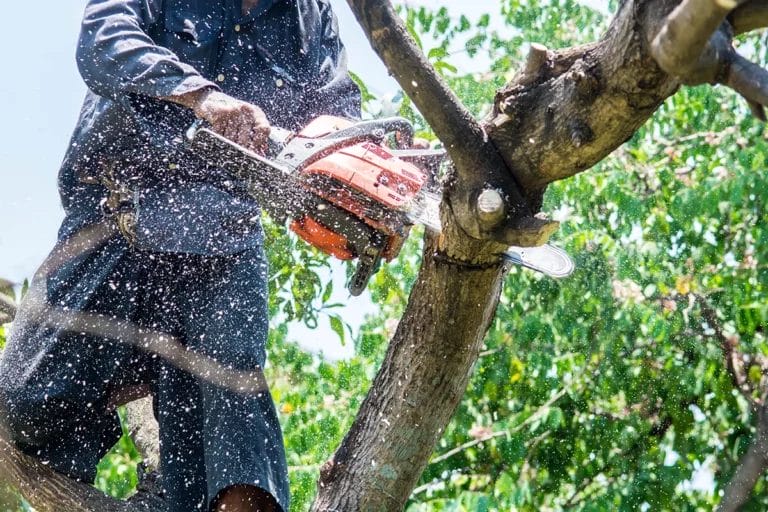
Sharp tools like hedge trimmers, chainsaws, and lawnmowers can cause severe cuts. Even minor lacerations can easily lead to infections if not properly treated. Plus, some of the worst injuries don’t happen while cutting at all — they happen during unjamming, when a worker reaches into a mower deck or trimmer head that still has tension on the blade.
Ensure your team wears cut-resistant gloves, keep blades sharp, and use tools correctly. Before clearing any jam, shut off the engine to prevent the blade from turning. Keep first-aid training current, since it teaches quick and proper wound care.
Flying Debris and Eye Injuries
Lawnmowers, weed trimmers, and other landscaping equipment can kick up rocks and debris at high speeds. These projectiles pose serious injury risks, not just to the operator’s eyes and face, but to anyone nearby. A mower’s discharge chute can throw objects far past what feels like a safe distance, which is how bystanders get hurt and how client windows, siding, and parked cars get damaged.
To reduce the chance of injury, workers should always wear safety goggles, aim the discharge chute away from people and property, and clear the area of loose rocks and debris before mowing. Property damage to a third party is also one of the most common reasons landscapers file an insurance claim — one more reason chute awareness matters.
Chemical Exposure and Burns
Fertilizers, pesticides, and herbicides contain harsh chemicals that can cause burns or respiratory issues. Without protective gear, these substances can irritate the skin, eyes, and lungs. The highest-exposure moment usually isn’t the spraying; it’s mixing concentrate, when the product is strongest and a splash does the most damage.
Ensure that you and your crew wear long sleeves, gloves, respirators, and safety goggles before opening any concentrate, not just while spraying. Always follow the product label’s mixing directions, store chemicals properly to minimize fire hazards, and never pour a product into an unlabeled container. With pesticides, be sure to read the label: it tells you exactly what protection each product requires.
Muscle Strains and Overexertion
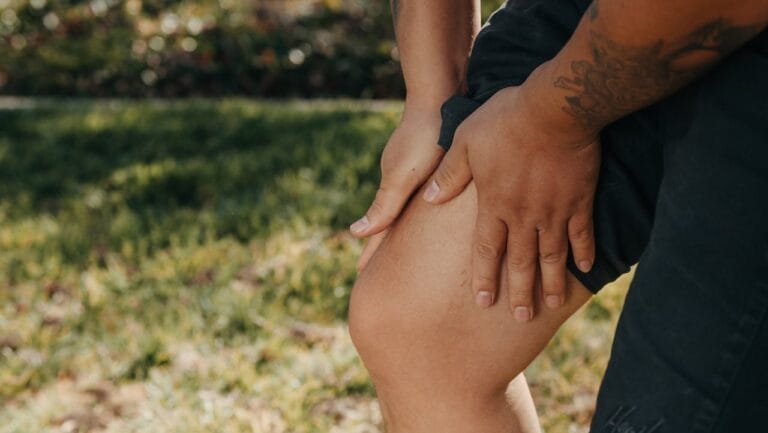
Heavy lifting and repetitive motions put stress on muscles and joints. Carrying sod, moving stones, or bending over for long periods can lead to back, shoulder, and knee injuries. Plus, the damage is rarely from one bad lift. It builds over a day of repetition, like the fiftieth sod roll or mulch bag, long after form starts to slip.
There’s also a hazard crews often overlook: prolonged use of trimmers, blowers, and other vibrating tools can cause hand and arm nerve damage over time. Encourage workers to use proper lifting techniques, rotate tasks to limit continuous vibration, take breaks, and stretch before shifts to reduce strain-related landscaping injuries.
Heat-Related Illness
The CDC reports that 50% to 70% of outdoor heat-related deaths happen within the first few days on the job due to lack of heat acclimatization, and landscaping is one of the most affected industries. Landscapers often work in direct sunlight for hours, increasing their risk of heat exhaustion or heat stroke.
Ease new and returning crew members into full workloads over their first week of hot weather rather than starting them at full pace. Provide shaded rest areas, frequent hydration breaks, and pair workers up on hot days — confusion and poor judgment are early signs of heat illness, and the person overheating is often the last to notice. Lightweight, protective clothing helps prevent overheating, too.
What to Do If a Landscaping Worker Gets Hurt on the Job
If a landscaping worker gets injured on the job, it’s crucial that all crew members know how to respond. Train your crew to assess the severity of the injury or illness; administer first aid; call for medical help if necessary; and document what happened.
Post-Injury Action Checklist:
- Assess the severity of the injury or illness
- Call 911 immediately for serious injuries
- Administer first-aid or CPR while waiting for help, if trained to do so
- Move the worker only if it’s unsafe to leave them in place
- Document the incident (time, location, task, equipment involved)
- Take photos of the scene, if safe and appropriate
- Collect contact information from any witnesses
- Report to OSHA, if required (within eight hours for a fatality; within 24 hours for an in-patient hospitalization, amputation, or loss of an eye)
- Report the incident to your workers compensation insurance provider
- Provide the injured employee with a workers comp claim form
- Check your state’s reporting requirements and deadlines
- Keep copies of all documentation for your records
Post your safety and injury-response procedures in trailers, trucks, or wherever your employees will easily see them. Carry a stocked first-aid kit to job sites and ensure at least one crew member is trained in basic first aid and CPR.
Check the Severity of the Injury, Give First Aid, And/Or Call for Help
Quickly assess the injury or illness, and don’t hesitate to call 911 if the situation is serious.
Speed is important; OSHA’s standard for serious injuries involving stopped breathing, cardiac arrest, or uncontrolled bleeding recommends access to medical assistance within the first three to five minutes. If you’re more than a few minutes from a hospital, it’s especially important to administer first aid or CPR until help arrives.
Move the injured worker only if it is safe to do so, unless there is an immediate danger, like fire or traffic. If in doubt about the severity of the injury, always err on the side of caution: call 911.
Document What Happened
After assisting an injured worker, document the details of the incident while they’re fresh. Write down what happened: time, location, what the worker was doing, and any equipment involved. Take photos of the scene if it’s safe and appropriate, and get contact information from any witnesses.
Keep Detailed Records and Report Incidents Promptly
Know OSHA’s required reporting timelines for employers: within 24 hours of an employee’s in-patient hospitalization, amputation, or loss of an eye as a result of a work-related incident, and within eight hours of the death of an employee as a result of a work-related incident.
Employers typically need to provide an injured employee with a workers compensation claim form, plus information on their rights and workers comp benefits, within 24 hours of the incident being reported. Some states — like California — require this even faster.
The employer is responsible for submitting the claim information and supporting documentation to the workers compensation insurer. Have your policy number, business details, and documentation from the accident ready when you do. In some states, employers must also report an accident to the state’s workers compensation board or designated agency.
It’s crucial to act quickly; the sooner you report, the sooner your provider can start the claims process.

When Workers Compensation Applies to Landscaping Injuries
In most states, if you have employees, workers compensation insurance is required by law. This coverage is designed to support your employees in cases of work-related injuries and illnesses, and it can protect you from having to pay expensive medical bills, lost wages, and funeral costs out of pocket.
What workers compensation insurance typically can (and can’t) cover:
| Designed Cover | Typically Doesn’t Cover |
|---|---|
|
Medical expenses related to work injuries |
Injuries caused intentionally by an employee |
|
Lost wages during recovery |
Court-ordered fines or punitive damages for injury to an employee working illegally |
|
Disability benefits, including permanent or temporary disabilities |
Penalties imposed for violating laws |
|
Ongoing care costs for long-term injuries |
Injuries outside the U.S., unless involving a U.S. citizen employee working temporarily abroad |
|
Funeral expenses in the event of a work-related fatality |
Damages from occupational diseases, unemployment compensation, or similar laws |
|
|
Damages arising from coercion, criticism, demotion, evaluation, reassignment, discipline, defamation, harassment, humiliation, discrimination, termination of any employee, or any personnel practices, policies, acts, or omissions |
When you submit a claim to your workers compensation insurer, an adjustor will investigate the claim and determine if it’s eligible for payout. Eligibility depends on the worker’s employment status, the business’s location, the details of the occurrence, and other factors.
Note: When it comes to workers compensation insurance, some states (Ohio, North Dakota, Washington, and Wyoming) are considered monopolistic, meaning workers compensation coverage must be purchased directly through the state.
Workers Compensation vs. General Liability for Landscapers
Workers compensation and general liability coverages protect landscapers in very different ways: workers compensation supports your employees, and general liability is designed to protect your business from accidents involving clients or the public.
| Coverage Type | Who It Can Protect | Example Scenario |
|---|---|---|
|
Workers Compensation |
Your employees |
A crew member strains their back lifting a heavy bag of mulch and needs medical treatment and paid time off to recover |
|
General Liability |
Your business, from claims by clients, property owners, and other third parties |
A rock kicked up by a mower cracks the glass sliding door on a client’s home |
To protect your landscaping business, you likely need both workers compensation and general liability coverage.
How to Build a Safer Landscaping Business Long Term
Building a safer landscaping business starts with consistency. Post safety checklists and response directions where they’re always visible, and train employees regularly on preventative safety measures and what to do in case of an accident. After an incident, review what happened and update any safety procedures, if needed.
But even the safest crews have accidents. The right landscaping insurance policy is designed to save your business from financial disaster when accidents happen. General liability insurance is built to protect your business from third-party claims, like broken windows and customer injuries, and defends against costly landscaping lawsuits, covering attorney fees, damages, and court costs if you’re sued.
Pro Tip: Dig deeper into what landscaping insurance covers and doesn’t cover, and explore optional additional coverages to reinforce your business.
FAQs About Landscaping Safety and Worker Injuries
What Should Be Included in a Landscaping First-Aid Kit?
For landscapers, a first-aid kit should include what you’d typically expect to find: adhesive bandages and tape, antiseptic, burn treatment, medical exam gloves, etc., plus items for injuries that could reasonably occur during landscaping activities, like a tourniquet for deep lacerations.
OSHA mandates that employers provide first aid supplies appropriate to the workplace’s hazards. If you’re unsure of what to stock in your first-aid kit, OSHA recommends consulting with a local fire/rescue department or appropriate medical personnel.
Does Workers Compensation Insurance Cover Injuries During Breaks?
Injuries during work breaks can be tricky when it comes to workers compensation. Generally, if an employee gets injured during a break while on the job site, workers comp will cover it. This includes injuries that happen in break rooms, cafeterias, or other designated areas.
However, if the break occurs off-premises or when the employee is free to leave, the injury might not be covered unless the employee performs work-related tasks. If an employee is on-call during a break or participating in a company-sponsored activity, workers compensation is more likely to apply. Always check your policy documents to learn exactly what’s covered.
How Do I File a Claim When an Employee or Client Gets Injured?
To file a claim with Insurance Canopy, fill out the form in your online dashboard and submit any necessary documents related to the injury. Include all relevant details, such as the nature of the injury, location, and medical information, so the claim can be processed smoothly and efficiently.
Do Independent Contractors Need Their Own Workers Compensation Coverage?
It depends. Standard workers compensation policies generally cover only employees, and many specifically exclude independent contractors and subcontractors. A solo contractor often isn’t legally required to carry it, but without their own policy, nothing covers them if they’re hurt on the job.
Plus, if you hire an uninsured worker who gets injured, it can become your liability, which is why many landscaping businesses require proof of coverage before a worker sets foot on site. Requirements vary by state, so check your local rules.
How Much Does Insurance for Landscapers Cost?
Landscaping insurance with Insurance Canopy starts at just $33.74 per month or $375 per year. Landscaping Insurance costs can vary depending on your business’s specifics and optional coverages you add.