

Three simple ways to protect your yoga students and support a safer teaching experience:
- Keep your yoga instructor certification current
- Stay attentive to your students throughout classes
- Use yoga risk assessments and safety checklists to spot issues early on
What are risk assessments, and how do they help protect your clients and your teaching business? We’ve explained it all and created a free downloadable risk and safety checklist to help you build safer habits for every class you teach.
What is a Yoga Teacher Risk Assessment?
Risk assessments are a tool for protecting your practice. They help you identify what could go wrong, so you can take steps to prevent those things from happening, or at least reduce the chances of them happening.
Regular risk assessments also help you establish robust safety habits and protocols for when accidents occur.
Pro tip: Sometimes accidents can’t be helped. For many of those unpreventable moments, yoga teacher liability insurance is designed to protect you financially so you can keep doing what you love.
Why Risk Assessments Are Important
Fifty percent of Insurance Canopy’s exercise and fitness claims have been caused by slips, trips, and falls since 2020.
If a client is injured as a result of something easily preventable, like a spot of spilled water or an overcrowded room, you could be held liable for not maintaining a safe environment. This means you could be responsible for medical bills or legal fees if you get sued.
You can significantly reduce the likelihood of accidents, injuries, and potential claims or lawsuits by conducting regular risk assessments.
“Just as yoga teaches steady and methodical movement to strengthen clients. Risk assessments and getting liability are steady and methodical ways to protect your yoga business. Risk assessments can help identify potential hazards before they become issues, while insurance offers a layer of protection in case the unexpected occurs. Together, these measures ensure a safer environment for both you and your clients.”
JoAnne Hammer, Insurance Canopy Program Manager and Certified Insurance Counselor
Areas Every Yoga Risk Assessment Should Cover
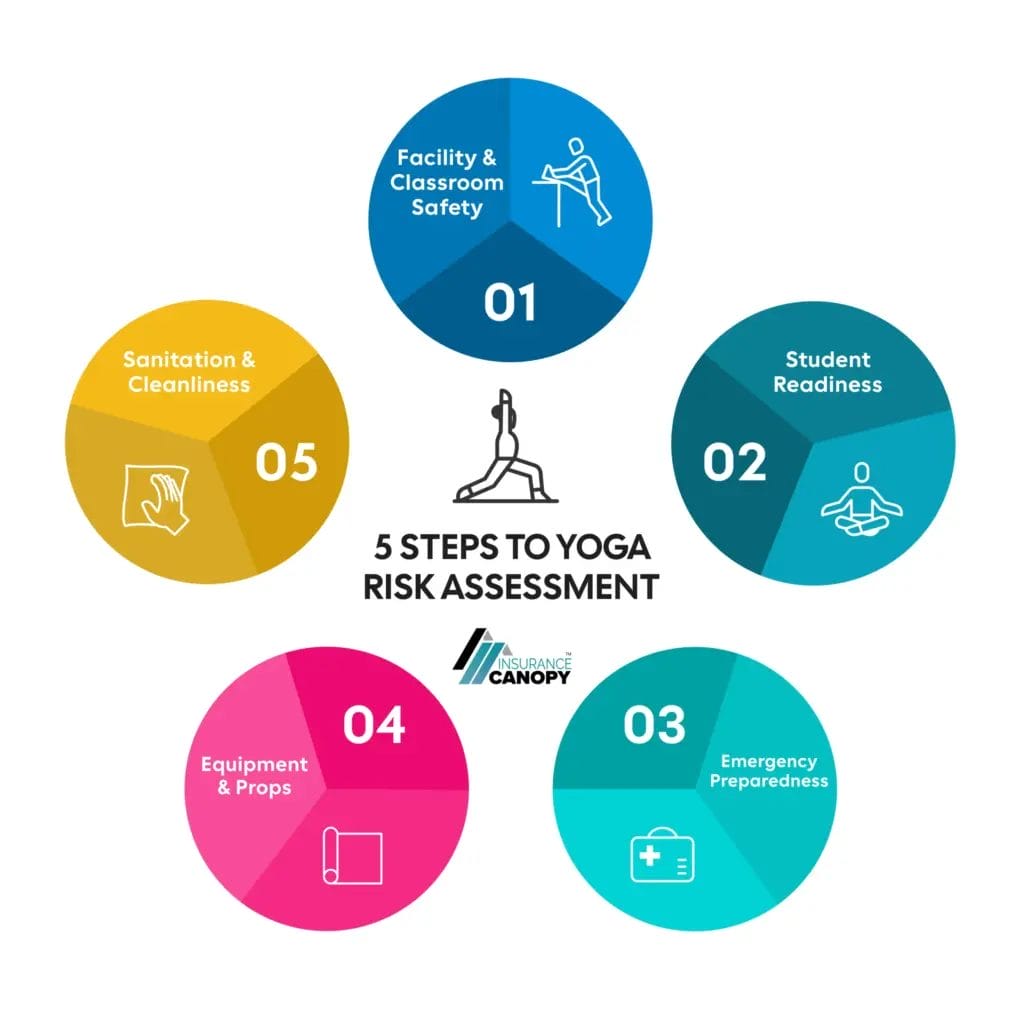
Risk assessments should be completed regularly and stored for future reference. Your studio may also have multiple assessments. For instance, one may include building-level safety checks that are typically the studio owner’s responsibility, like fire alarms and sprinkler systems.
Many risk and safety assessments are daily or per-class checklists. Regardless of level, they should all include consideration for:
- Facility and classroom/space safety
- Student readiness/safety
- Emergency preparedness
- Equipment and props
- Sanitation and cleanliness
- Actions needed (and taken) to address risks
Facility and Classroom Safety
Every yoga risk assessment needs a section identifying potential hazards and addressing the safety of the physical space where the class takes place. This includes things like:
- Fall hazards in entryways, exits, hallways, or classrooms
- Comfortable classroom temperature
- Appropriate lighting for navigating the space
- Clearly marked emergency exits
- Clean, dry (not slippery) classroom floors
- Special location considerations, like the weather for park yoga classes
Student Readiness
Not only is it your job as a yoga instructor to provide a safe physical space for your clients, but it’s also your job to look out for your students’ well-being by providing safe and appropriate instructions.
This means you should have every new student complete a liability waiver form with emergency contact info and a health history form. Keep this information on file and update it regularly.
Yoga liability waivers inform participants of the risks involved with yoga and serve as another layer of protection in case of accidents. You should also get their emergency contact information in the rare event that an accident becomes a real emergency.
Health history forms help you identify medical red flags. They help you determine if someone needs modifications, like a student on beta blockers may need to move more slowly or avoid inversions. They also help you assess if someone should seek a medical consult or get clearance before starting yoga.
How health history forms may reduce your personal liability exposure:
If a student doesn’t disclose a condition and they experience an issue in your class, having a completed health history on file may reduce your liability risk. If you don’t use a health questionnaire, you could be blamed for causing a client’s medical event or worsening a medical condition because you failed to do a proper health screening.
Emergency Planning
Emergencies may be rare, but you should always be prepared. Preparedness helps keep minor emergencies from becoming major ones.
Before or between classes, get (and stay) prepared by:
- Confirming emergency contacts are accessible
- Confirming AEDs are accessible
- Checking first aid kits for accessibility and proper upkeep
- Knowing the best way to contact 911 and the exact address to give to 911 if you need to call
- Checking in with students visually and/or verbally (like asking “Any injuries or changes I should know about today?”)
On a regular basis (but not every day), you should also:
- Keep your CPR certification current
- Review and/or practice your location’s emergency action plan (EAP)
- Confirm you have accurate, updated health and contact info for all students
- Get updated health and contact info from students
- Confirm emergency equipment (AEDs) are being properly maintained (typically the responsibility of the studio owner)
Equipment and Props
Accident and injury prevention also includes keeping all community equipment in good condition. Inspect all props, mats, and other equipment regularly for:
- Structural defects
- Fraying, tearing, and other signs of wear
- Safe, organized, and out of the way storage
Sanitation and Cleanliness
Maintaining a clean environment is an essential part of creating a safe environment for clients. A safe classroom environment minimizes the risks of illness, as well as physical injuries. Plus, no one wants to use a bolster that smells or a sweat-stained yoga strap.
Between or before classes, ensure the environment is as clean as possible:
- Inspect the floor for puddles, dirt, and debris
- Ensure shared props are sanitized between classes
- Ensure hygiene products like tissues, hand soap, and hand sanitizer are available to student
Actions to Address Risks
Every yoga teacher’s risk assessment or safety checklist should include space to record any identified risks and what the instructor did to address them. This information is a crucial aspect of any studio owner’s or teacher’s records.
Keeping these records may also help you prove you follow regular, reasonable safety procedures if you’re ever sued for something like negligence.
For example, say you’re teaching the first yoga class of the day after it snows. The snow from your shoes makes the studio’s floor wet. So, you place one of the studio’s winter rugs at the entryway to help stop puddles from forming. Then you set out the studio’s “Caution” sign to inform anyone arriving to be aware of wet, slippery floors.
On that day’s safety checklist, you make a note that the floors were wet and a slip and fall risk. You also record what you did to reduce/remove that risk. In this case, you used the studio’s designated rug to keep the entryway dry, and you displayed the appropriate signage.
If someone later sues you and the studio for negligence, claiming they fell and broke their wrist because your floors were wet, having this record could help you prove you weren’t negligent.
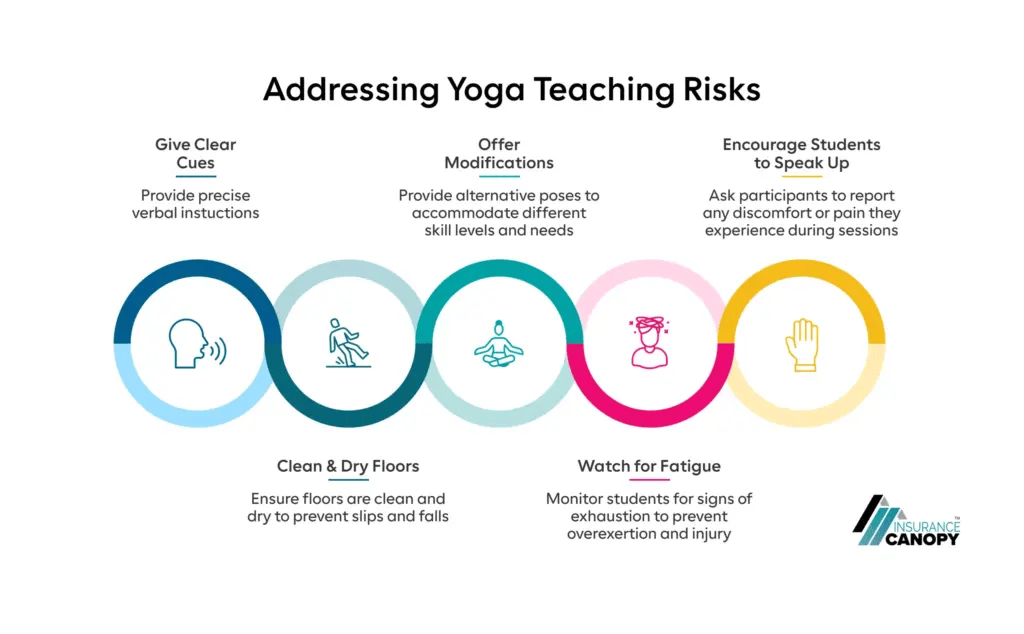
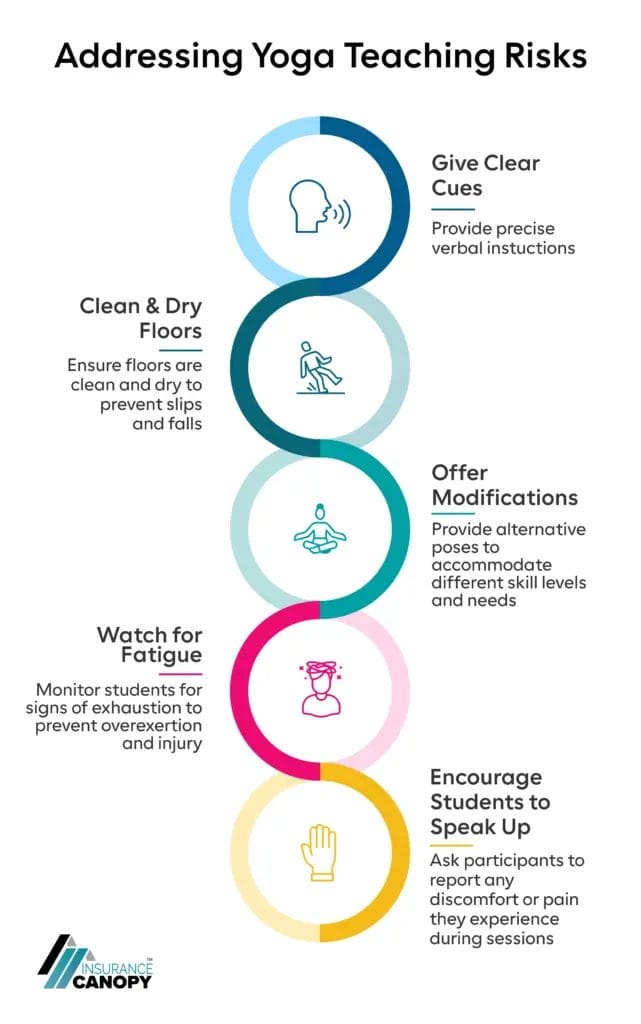
Pro tip: Small actions during yoga classes can reduce big risks. Remember to:
- Offer modifications throughout class
- Watch for signs of fatigue or dizziness
- Keep cues simple, clear, and audible
- Encourage students to speak up or raise a hand if they need assistance
Download Your Yoga Risk Assessment Checklist
Download a copy of our free yoga risk assessment checklist.
The Role of Yoga Teacher Insurance in Safety and Risk
Yoga teacher risk assessments help you:
- Identify gaps in your safety practices
- Identify potential risks to student safety
- Protect students from common injuries
- Document your due diligence and safety procedures
- Protect your business from claims and lawsuits by preventing common accidents
What happens if you do everything right, but a student still gets hurt? That’s where yoga instructor insurance comes in.
Risk assessments and safety checks help you reduce the risk of accidents. Yoga teacher liability insurance is designed to help you pay for accidents, claims, and lawsuits if and when they do occur.
Pro tip: Learn more about yoga teacher insurance, like what it covers and how you can tailor your policy to fit your needs.
Frequently Asked Questions About Yoga Risk Assessments
Do I Need Yoga Insurance if I Use Liability Waivers, Risk Assessments, and Safety Checklists?
Yes, yoga instructors need insurance.
Waivers and risk assessments are important tools in decreasing the likelihood of claims and lawsuits being filed against you. However, they don’t protect you from the financial consequences if a claim or lawsuit is filed — that’s what yoga teacher insurance is designed to do.
Do I Need a Separate Risk Assessment for Each Venue or Class Type?
It depends. If you’re teaching at multiple studios, they may each have their own risk and safety protocols you’re required to follow.
You could also adapt a broad safety checklist to most of your classes by including all potential risk-related questions on every form, and only completing the ones that are relevant to that class. Just make sure to have a method for indicating which items are not relevant to the class in question.
Our yoga risk assessment template includes questions designed to apply to as many venues and class types as possible.
Which Yoga Styles Are Covered by Yoga Teacher Insurance?
Insurance Canopy covers a variety of yoga styles, including adapted, Bikram, Hatha, prenatal, Vinyasa, and more. See our full list of covered and excluded yoga styles.


