

All work related to fitness and movement involves some level of physical proximity to other people, references to different parts of the body, and verbal or physical cuing and form correction. Plus, every client, class participant, and athlete has their own comfort level around these situations.
This is why consent and communication are imperative for personal trainers. In the event a communication breakdown leads to a claim or lawsuit, Sexual Abuse and Molestation (SAM) coverage is designed to act as your business’s financial safety net.
Let’s explore what SAM coverage is, what it covers, and why it’s essential for fitness professionals.
The Use of Physical Touch in Coaching: Communication, Boundaries, and Client Comfort
Physical touch is part of most trainers’ day-to-day toolkit. Some common situations where trainers may need to touch or be physically close to clients include:
- Spotting lifts
- Correcting movement patterns
- Adjusting posture or alignment
- Preventing falls or assisting with balance
- Addressing injuries
Although trainers often use touch and anatomical references as tools with no malicious intent, when it comes to inappropriate behavior and sexual misconduct or abuse, it’s not the intent behind the action that matters. What matters is how the action or comment is perceived.
This is one reason why it’s crucial for trainers to remember and respect that every client has their own cultural and personal boundaries, past experiences, and comfort levels around physical touch. When trainers forget this or make assumptions — even subconscious ones — about clients, it can lead to unfortunate misunderstandings.
Misunderstandings can stem from a variety of circumstances, and are a persistent risk when you work closely with other people. Examples of scenarios that could turn into claims or allegations include:
- A client misinterprets your verbal instructions while correcting their kettlebell swing technique
- A parent questions how their youth athlete was coached
- You reach out to steady a client who looks like they’re about to fall, and later, they claim you touched them inappropriately
Why Standard Liability Coverage May Not Cover SAM Claims
Most fitness professionals carry general and professional liability coverage, and both are essential. But neither is built to respond to allegations of sexual misconduct. Here’s how the three coverages compare:
| Coverage Type | What It Covers | What It Doesn't Cover | Example Scenario |
|---|---|---|---|
|
General Liability |
Bodily injury and property damage claims caused by your business operations: think strains, sprains, and damaged equipment |
Claims tied to your professional services or instruction, and sexual misconduct allegations |
A client trips over your equipment bag and sprains their ankle |
|
Professional Liability |
Claims stemming from your professional advice, instruction, mistakes, or alleged negligence |
Sexual misconduct allegations and injuries unrelated to your professional services |
A client says your form correction caused a shoulder injury |
|
SAM Coverage |
Allegations of sexual misconduct, abuse, or inappropriate behavior |
Intentional acts, proven wrongful conduct, claims outside your policy period, or assumed liability |
A client misinterprets a hands-on form correction and alleges inappropriate touch |
Most fitness insurance policies explicitly do not cover claims and allegations of sexual misconduct. This means even a fully insured trainer can find themselves uncovered for one of the most expensive types of fitness-related lawsuits to defend. That’s the gap SAM coverage is designed to close.
What Is SAM Coverage for Fitness Trainers?
SAM coverage for fitness trainers is designed to protect personal trainers and other fitness professionals against the cost of claims involving allegations of sexual misconduct, abuse, or inappropriate behavior. It can help cover the cost of things like:
- Attorney fees
- Defense costs
- Judgments
- Awards and settlements
However, SAM insurance does not cover things like:
- Intentional acts or proven wrongful conduct (when a court officially rules that you violated a legal or ethical standard)
- Legal actions or claims for alleged sexual misconduct that occurred before or after your policy period
- Assumed liability (when you take responsibility for and/or accept fault for an allegation without letting your insurance company investigate first)
SAM coverage is an endorsement or update to the standard fitness liability policy. It means your insurance, which normally excludes sexual misconduct allegations, can cover these kinds of claims. It is not a separate or standalone policy, and it cannot replace your general or professional liability insurance.
If a situation ever does escalate, knowing how to file a claim and what to expect can make the process more manageable. Report all claims and incidents that could become claims as soon as possible. Remember: Do not admit fault or hire your own attorney before speaking with your insurance.
Common Myths About SAM Coverage for Fitness Trainers
Common misconceptions can lead fitness pros to assume SAM coverage isn’t for them. Most of the time, those assumptions sound reasonable on the surface, but don’t hold up against how allegations work.
Here are three of the most common myths:
| Myth | Reality |
|---|---|
|
“I’m a professional, so I don’t need this.” |
Allegations don’t require wrongdoing to file a claim. Even seasoned trainers with stellar communication habits face claims based on misinterpreted touch, misheard cues, or clients’ past experiences. SAM coverage exists for the gap between intent and perception, not as a comment on your professionalism. |
|
“A waiver covers everything.” |
Waivers are valuable. They document informed consent, set expectations, and can discourage frivolous claims. But a waiver doesn’t stop someone from filing a lawsuit, and it doesn’t pay your legal defense costs if they do. |
|
“This only applies to high-risk businesses.” |
Any business with hands-on client contact has exposure: spotting a lift, correcting form, steadying a client who’s losing balance. “Low risk” isn’t the same as “no risk,” and the cost of defending a single allegation can quickly outpace years of insurance premiums. SAM coverage isn’t about how risky your business is; it’s about being prepared in case a misunderstanding occurs. |
How to Reduce Risk During Training Sessions
Your job is to make sure your clients exercise safely, and part of that includes ensuring they feel safe while exercising, too. Just as you evaluate each client’s fitness level and tailor workouts to fit the individual, you must also establish comfort level and consent around physical touch with each client.
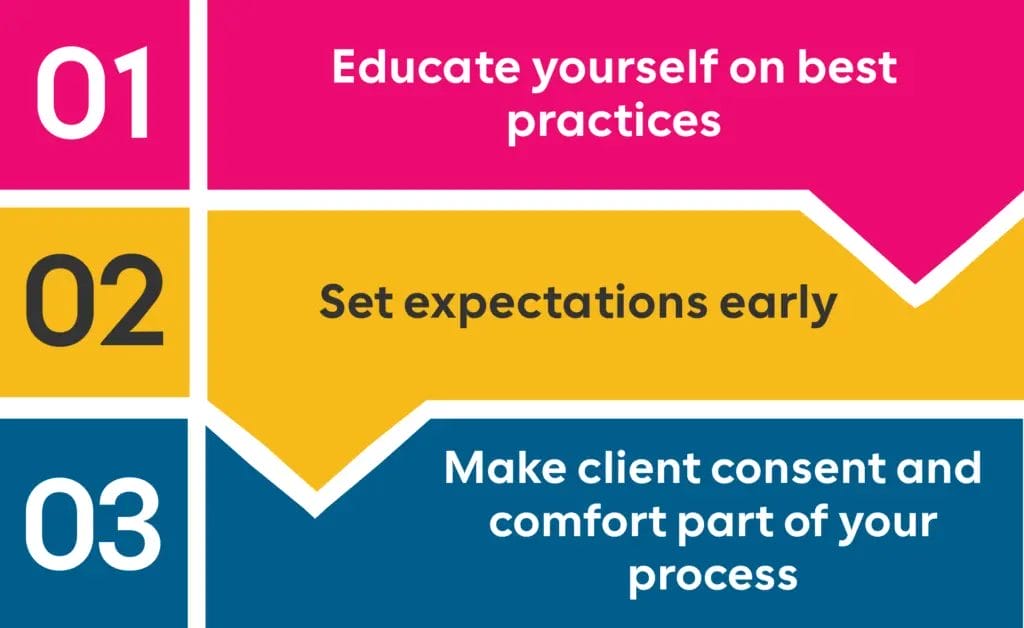
Some protocols to reduce the risk of miscommunications and misunderstandings around touch include:
- Educate yourself on best practices
- Set expectations early
- Make client consent and comfort part of your process
Education
You can’t know every client’s personal experiences that might make misinterpreted touch especially sensitive or triggering. This is one reason why educating yourself on best practices around touch and consent is crucial.
Many organizations require trainers to take a number of ethics credits as part of their continuing education. Some classes may include material on consent and touch, which would not only fulfill continuing education credit requirements but also help you better serve your clients.
Setting Expectations
Setting expectations early in the client relationship can help avoid misunderstandings by eliminating surprises and establishing boundaries ahead of time.
Strategies for setting expectations include:
- Add simple information about the level of touch you use to your intake paperwork
- Have clients complete liability waivers and informed consent forms
- During or right before sessions, explain what you’re planning to do and why
Example phrases:
- “Do you have a form correction preference between verbal, visual, or physical cues?”
- “Sometimes I use hands-on cues to help with form, like tapping your back or guiding your arm. I’ll always explain first, but if you’d rather I don’t, I wont. Just let me know.”
- “I’ll always verbally cue you first, but I may want to adjust your position physically. You can always say no or ask me to stick to verbal or visual cues.”
- “If I ever need to adjust your position, I’ll tell you what I want to do and why first. Feel free to say no or ask for a different explanation.”
Make Client Comfort Part of Your Process
If you make consent feel like a normal part of the coaching process rather than an awkward issue, clients may feel more comfortable communicating with you. This, in turn, may help you avoid accidentally overstepping or unknowingly crossing a client’s boundaries.
Some strategies for integrating comfort and consent into your coaching process include:
- Keep language simple and conversational
- Explain what to expect and the purpose of the touch
- Ask for consent in simple language before actually making contact
- Normalize the choice to opt out of physical contact
- Offer verbal or visual alternatives
Example phrases:
- “Is it okay if I touch your arm so I can slightly adjust your elbow’s position?”
- “For this movement, I may place a hand on your back just below your shoulder blades to help you stay aligned. Does that sound okay?”
- “Let me know if your comfort level ever changes. I’m always happy to adjust.”
Professionalism Includes Clear Boundaries and the Right Protection
Learning and adhering to best practices for the use of touch while training is essential for trainers. It helps keep your clients feeling safe and reduces the risk of misconduct allegations. However, best practices aren’t a replacement for coverage.
Sometimes misunderstandings still happen when you believe you’re communicating perfectly. The best way to protect yourself from claims related to sexual misconduct allegations is to:
- Communicate clearly with your clients
- Establish clear boundaries for the use of touch
- Carry SAM liability insurance
Frequently Asked Questions About SAM Coverage for Fitness Trainers
Does General or Professional Liability Insurance Cover Allegations of Inappropriate Conduct?
No. The vast majority of general and professional liability policies specifically exclude sexual misconduct allegations. You need a sexual abuse and molestation coverage endorsement to help protect yourself from these types of claims.
Do I Need SAM Insurance if I Already Use Waivers?
Yes. Waivers are an extra layer of protection, but they cannot keep someone from filing a lawsuit or claim against you.
Is SAM Coverage Only for Trainers Who Work With Minors?
No. SAM coverage applies to all trainers, regardless of who or how old their clients are.
Does Carrying SAM Coverage Imply I'm Doing Something Wrong?
No, carrying SAM coverage is a professional risk management decision, not a statement about your character or conduct. The same way general liability coverage doesn’t suggest you’re a careless trainer, SAM coverage doesn’t suggest you’re an inappropriate one. It exists because allegations can be made against responsible professionals who are doing everything right, and defending against them can be expensive.


