
A dreaded lawsuit — it’s every fitness professional’s worst nightmare. Despite your passion and expertise in helping people achieve their fitness goals, sometimes something as small as a missed cue or an errant puddle of water can spur a client to threaten legal action.
While you can’t completely bulletproof your fitness business against risk, you can make proactive moves to reduce your chances of getting sued. Here’s how to avoid lawsuits as a personal trainer in seven practical steps.
This blog is for educational purposes only. Speak to a legal professional for advice specific to your fitness business.
How to Reduce the Risk of Lawsuits for Fitness Instructors
Understanding Where Lawsuit Risks Come From
Even in a controlled gym setting, the numbers show that fitness injuries are far from rare. Nearly 483,000 people were treated with emergency care for exercise equipment-related injuries in 2023.
When you notice a client’s improper form during a session, you correct them. Why? Because holding their body incorrectly opens them up to injury risks. It’s the same with your fitness services — “bad business form” invites the possibility of personal trainer lawsuits.
Here are some common legal threats fitness professionals face:
- Client injuries
- Inadequate supervision
- Poorly worded waivers
- Damage to other people’s property
- Misrepresentation of your services
- Equipment that’s not properly maintained
- Undisclosed client conditions that affect training
- Sharing client information or photos without permission
- Negligent advice (especially on nutrition or medical topics)
Whenever you fall short of keeping clients safe — even if an incident is not 100% your fault or a mistake is simply perceived — you’re vulnerable to litigation. Even the most careful trainers face claims, so your objective is to ensure your operations are as low-risk as possible.
And just like you tell your clients: it’s about consistency, not perfection. Reducing your chances of facing a lawsuit is an ongoing, everyday practice!
Pro Tip
Can you afford to pay $200K because of a weight machine injury? Oof. Check out real-life fitness claims and how Insurance Canopy stepped in with a clutch financial spot for each policyholder.

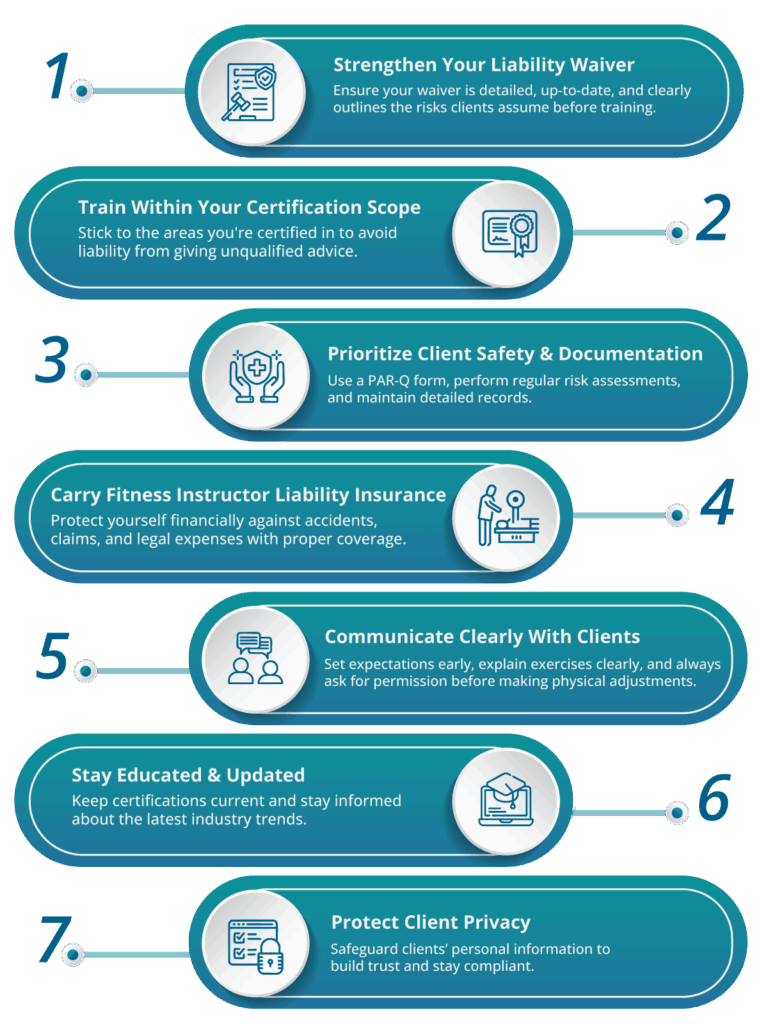
1. Strengthen Your Liability Waiver
If you’re not already using a fitness instructor liability waiver, implement one ASAP. This legal document helps deter clients from pursuing legal action against you by educating them on the potential risks of training and taking on the liability themselves.
In short, it’s a form clients sign before starting sessions that says they understand they could get injured, for example, and agree not to sue you if they do get hurt (as outlined by the waiver).
Here’s how to power up your liability waiver:
- Use clear, client-friendly language (the easier to understand, the better)
- Include clauses for assumption of risk, informed consent, and emergency response
- Revisit your waiver every year or whenever your services or operations change
- Have a legal professional review your waiver to ensure it is compliant with local laws and outlines risks and scenarios specific to the services you offer
-
Your Next Step:
Get a free fitness liability waiver template, customize it for your business by outlining potential risks associated with your services, and consult a lawyer for input before use.
Insights From a Lawyer
“The most common trigger for lawsuits in this space is poor documentation. Most trainers use boilerplate waivers they found on the internet that do not address each state’s liability standards or nuances regarding client consent when engaging in riskier activities.
A comprehensive, tailored agreement and/or waiver should articulate the scope of the service, the assumption of risk, and emergency procedures, and still present professionalism and care.”
Christopher Migliaccio, Founder of Warrren and Migliaccio L.L.P.
2. Train Within Your Certification Scope
Whether you guide students through sunrise asanas or create personalized workout plans based on the knowledge you gained through a personal trainer certification program, you must always stay within your scope of expertise. Crossing that boundary can easily lead to lawsuits.
Even if you have the best intentions, offering medical or nutritional advice can be interpreted as practicing outside of your certified scope, and your recommendations can easily backfire. So, steer clear of suggesting supplements or diagnosing a condition — it’s not worth it.
Be sure to:
- Clarify your credentials in writing
- Refer clients to qualified professionals (build a network of dietitians and physical therapists you can confidently recommend to clients)
- Document all communication, especially when a client asks about nutrition or pain issues, and how you responded with the proper referral
Try this simple script if a client needs help beyond your scope of practice:
“I’d love to help, but nutrition and injury rehab are outside my certified expertise. I can help you find a registered dietitian or physical therapist who can give you safe, personalized guidance. I want you to get the assistance you need, and other professionals are better suited than I am for this situation.”
-
Your Next Step:
Audit your messaging by reviewing your website, social media, and onboarding materials to ensure you never promise services or advice beyond your certifications. Adjust language where needed.

3. Prioritize Client Safety and Documentation
Part of fitness instruction is constantly checking for safety — everything from a student’s posture to a weight machine’s settings. The key is to record the action you take, because robust documentation shows you follow proper protocols and can protect against exaggerated claims.
Even a minor injury like a rolled ankle can grow into an expensive claim. But, if you have the papers to prove you provided a safe environment and offered modifications, it can help subdue a litigious client’s allegations.
It may not surprise you, but gym-related injuries are higher among beginners, with up to 80% experiencing at least one injury within the first year. If you work with new-to-fitness clients, you especially need to level up your safety game.
Follow these best practices:
- Use a PAR-Q form, a screening questionnaire to determine if new clients are OK to participate in your training program based on their health history; always include this form in onboarding and store forms securely (either digitally with timestamps or locked in a physical cabinet)
- Take detailed session notes outlining verbal client concerns or physical difficulties, plus your responses; give a clear account to document how you addressed concerns, made adjustments, or ended a session to keep your client safe
- Regularly perform personal trainer risk assessments to identify, evaluate, and take action to reduce hazards in your training space; things like worn cables and out-of-place dumbbells should be caught before they cause injury
- Establish emergency procedures so you don’t have to scramble if a client gets hurt; keep emergency contacts and incident reports ready to go so you know exactly what to do and how to document the event
-
Your Next Step:
Start your safety folder today — as easy as creating a digital folder on your work laptop. Organize subfolders for waivers, PAR-Q forms, session notes, risk assessments, and incident reports, and set a recurring reminder to update them weekly.
Insights From a Lawyer
“Under-protection in documentation is also a problem that occurs to many trainers. All the sessions, changes, and incidents ought to be recorded. I have witnessed dismissal of cases where a trainer had comprehensive session notes indicating that they told the client about the risks that could have occurred.”
Robert Tsigler, Attorney at Law Offices of Robert Tsigler, PLLC
4. Carry Liability Insurance for Fitness Instructors
If you’re a fitness instructor, you need fitness instructor insurance — full stop. This essential safety net financially protects your business if a client claims your services caused an injury, damaged their property, or even failed to help them meet their fitness goals.
Essentially, it transfers the risk of fitness instruction from you to the insurance company. It’s not a pass to be lax about safety, but it’s there to cover costly lawsuits or damages awarded if you need it. Liability coverage provides peace of mind, so you can focus on showing up for clients.
Here’s what you need to know about fitness instructor insurance:
- At a minimum, you need general liability and professional liability insurance to protect you from common claims (Hint: Insurance Canopy combines both into one simple policy!)
- If you teach multiple fitness styles, double-check that your insurance covers all of your services — see our list of 100+ covered training styles
- Look for a policy with robust coverage limits (the industry standard is $3 million aggregate, or total for the entire policy year) so you can feel confident you’re truly protected
Fitness instructor insurance costs are more affordable than you think — Insurance Canopy’s policy starts at just $15/month for top-rated coverage
-
Your Next Step:
Get an instant fitness instructor insurance quote online and purchase your policy in minutes. It’s fast and easy, and you can get covered before your next class begins!

5. Communicate Clearly With Clients
An often overlooked but crucial step to lowering the risk of fitness lawsuits is communicating as clearly as possible with clients. Misaligned expectations can lead to clients feeling jilted when they don’t get the results they want, and a misinterpreted touch during a session can escalate quickly.
When instructing, always let clients know what you’re doing and why. Ask for express permission before making any physical adjustments — and again, explain the purpose so clients can feel confident and comfortable.
Communicate clearly by:
- Discussing realistic outcomes early: Don’t promise specific results like “lose 10 pounds in a month”; instead, emphasize consistency and how much stronger they’ll feel
- Checking in before and after classes: Encourage clients to speak candidly about their progress and what they need from you — great communication goes both ways
- Maintaining professionalism: Stay professional during every interaction to avoid giving clients any chance to misinterpret your words or actions when working with you
Here’s an example script for managing client expectations:
“My goal is to help you build sustainable habits. Every body responds differently, so we’ll focus on consistent progress rather than fast results. Let me know how you’re feeling, and we’ll track your metrics and make adjustments along the way.”
-
Your Next Step:
1. Add an “Expectations & Responsibilities” section to your onboarding form, so clients can acknowledge that their progress depends on their efforts.
2. Purchase sexual abuse and molestation (SAM) insurance to protect your business just in case you’re ever accused of acting inappropriately. This essential coverage is designed to cover the costs of clearing your name against misconduct allegations.
6. Stay Educated and Updated
Whether you’re starting a fitness business or are an industry pro, keeping up with ongoing education is crucial. Safety guidelines and legal requirements evolve quickly, and if you fall behind, even unintentionally, your methods can become unsafe.
Plus, clients want assurance that you know the latest in the industry, so staying updated boosts your professional credibility, too.
Keep your business up-to-date by:
- Renewing certifications on time
- Attending continuing education workshops, especially on topics like injury prevention or virtual coaching laws
- Joining a professional organization (like IDEA Health & Fitness Association) for updates and resources
- Connecting with modality-specific or local industry professionals through Facebook groups — check out The Best Facebook Groups for Fitness Professionals
-
Your Next Step:
Block one hour this week to research an upcoming continuing education course or webinar you can attend.

7. Protect Client Privacy
Promoting your fitness business online is smart, but it comes with risks. Posting “before and after” photos or videos of classes on social media can lead to legal trouble if a client doesn’t want their images shared online.
Protect client privacy by following these best practices:
- Always use written photo, video, and testimonial releases: Clients must give explicit, signed consent before you share identifying images or success stories
- Avoid casual sharing: Don’t post client photos or progress stats in group chats or social media without permission
- Secure client data: Use password-protected systems for storing any sensitive client information, like health history or credit card details
-
Your Next Step:
Review your online materials. Delete or archive any client content shared without written consent, and create a digital “Media Release” form for future use.
“Risk prevention is as much a matter of tone as it is policy. Fitness professionals may be able to frame safety protocols as part of a high-touch, personalized experience, as opposed to a document. Given the legal environment today, protecting your business is not reactionary; it is simply part of building a professional trust brand.”
Christopher Migliaccio, Founder of Warrren and Migliaccio L.L.P.
Insurance Canopy, Supporting Your Fitness Business
Now that you know how to lower the risk of lawsuits as a fitness instructor, why not cross off the step of getting insurance coverage now? Insurance Canopy offers top-rated fitness liability coverage from $15/month with optional add-ons for your fitness gear, cyber liability, and more!
Get protection that empowers your business — for every rep, set, and session. A single policy covers 250+ fitness training styles, and you can buy a policy online in minutes. Start helping clients on their fitness journeys with peace of mind.
FAQs About Lowering Your Risk of Fitness Instructor Lawsuits
Do Liability Waivers Fully Protect Fitness Instructors From Lawsuits?
No, a liability waiver won’t fully protect you from lawsuits. It’s designed to discourage clients from taking legal action against you and won’t cover you for instances of extreme negligence or intentional harm.
For an extra layer of protection, carry fitness liability insurance to cover claims of accidental injuries, property damage, or unintentional professional mistakes. Insurance and waivers work together to shield you from potential lawsuits (and the costs to take care of them).
What’s the Difference Between General and Professional Liability for Trainers?
General liability insurance is designed to cover general accidents related to your business, like a client’s slip-and-fall injury in your training space. Professional liability insurance protects you if a client gets hurt or is “wronged” specifically due to your instruction or advice.
Learn more about the difference between general and professional liability insurance for personal trainers.
What is the PAR-Q+ Form, and When Should I Use It?
The PAR-Q+ form is a standardized questionnaire used to determine if a client is fit to participate in physical activity. You should use it before working with every new client to understand their health and how to tailor your services to their unique physical condition.
If a Client Ignores Instructions and Gets Hurt, Can I Still Be Sued?
The harsh truth is that a client can sue you for anything — even if their injury is not your fault. Whether or not that lawsuit goes anywhere is a different question.
To protect yourself as comprehensively as possible, always carry liability insurance as a financial safety net in case those client injuries escalate further.
What Forms Should I Have Clients Sign for Online Classes?
Generally, you should have clients sign the same types of forms you use for in-person classes. Tailor your liability waiver to include online-specific risks, and include a media release form if you plan on recording sessions for promotional use.

JoAnne Hammer | Program Manager
JoAnne Hammer is the Program Manager for Insurance Canopy. She has held the prestigious Certified Insurance Counselor (CIC) designation since July 2004.
JoAnne understands that starting and operating a business takes a tremendous amount of time, dedication, and financial resources. She believes that insurance is the single best way to protect your investment, business, and personal assets.
JoAnne Hammer is the Program Manager for Insurance Canopy. She has held the prestigious Certified Insurance Counselor (CIC) designation since July 2004.
JoAnne understands that starting and operating a business takes a tremendous amount of time, dedication, and financial resources. She believes that insurance is the single best way to protect your investment, business, and personal assets.