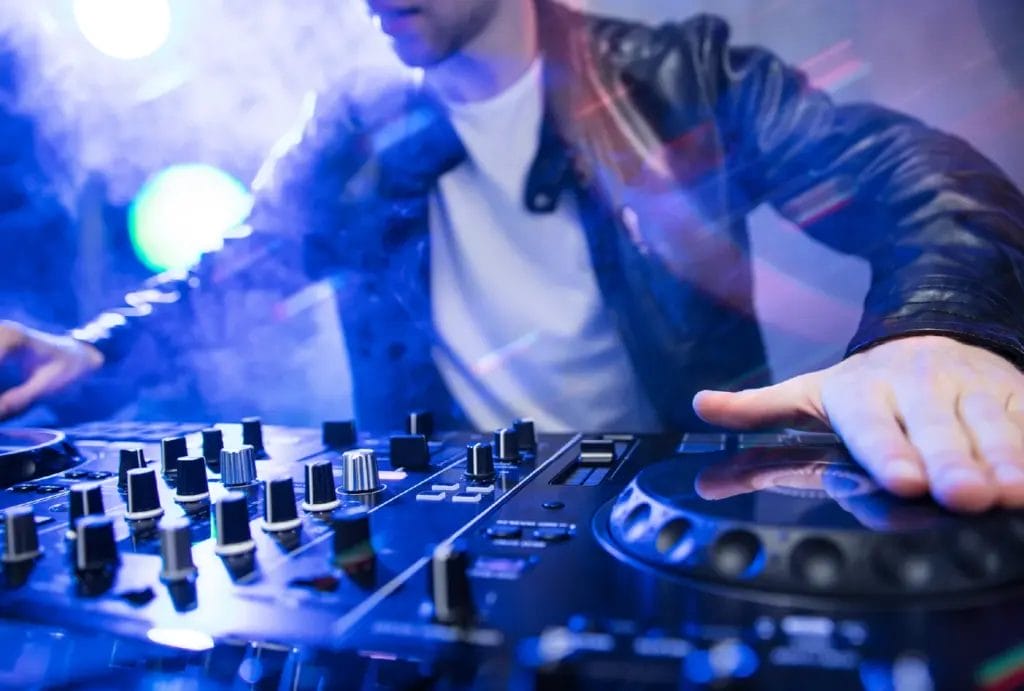
You know your way around mixers, but stepping into paid gigs is a brand new world. Don’t fret. You just need the right foundation. Whether you want to bring the jams to weddings, corporate parties, or school events, this guide walks you through how to level up your passion into paid gigs. Plus, grab our free downloadable checklist, so you’re always prepared.
Your Checklist:
- Find your DJ niche
- Build your skills
- Buy starter equipment
- Protect your gigs with DJ insurance
- Snag your first paid gig
Choose Your DJ Style (Club, Wedding, Mobile)
There’s no shortage of DJ types to choose from that fit your unique sound and vibes. Maybe MCing at weddings is your first choice, or you prefer mobile gigs for corporate parties and university events.
Check out our info on more DJ career paths, the type of gear you’ll need, and insurance requirements to make your gigs a five-star experience.
Swipe →
| DJ type and where you play | Where you play and starter gear | Starter Gear |
|---|---|---|
|
Wedding |
Hotels, ballrooms, barns
|
Portable PA system, 2+ wireless mics, and backup music/power |
|
Club |
Nightclubs, lounges, restaurants |
USBs or controllers, headphones, mixers, and players |
|
Mobile and private parties |
Homes, community halls, Condo or property association clubs |
All-in-one controller, PA system, and basic lighting |
|
Festivals and large events |
Outdoor stages, fairgrounds, extravagant venues |
Personal USBs, house PA system, monitoring |
|
Silent disco |
Parks, gyms, rooftops |
Controller, transmitters, headsets |
|
Radio and streaming |
Online, radio booth |
Laptop, mic, streaming tools |
|
Turntablist and performance |
Showcases, battles, content creation |
Turntables, media players, battle mixers, and spares |
|
Corporate |
Hotels, conference centers |
Reliable PA system, extra mics, backups |
|
Colleges and universities |
Campuses, student mess halls |
Laptop and DJ software, headphones, PA system |
Insurance You’ll Need for Any Gig
- General Liability Insurance (must-have): Most venues require this coverage to protect against guest injuries or property damage
- Gear and Equipment Coverage (Inland Marine): An optional add-on designed to protect your setup if it’s damaged or stolen
- Cyber Liability Coverage (optional add-on): Designed to protect you if you take payments or store client data online
- Additional Insureds: Venues or event planners may ask to be added to your policy to protect them if something goes wrong
- Certificate of Insurance (COI): Keep it handy, as venues often ask for proof before you perform (or even before hiring you)
Build on Your DJ Skills…Fast
Anyone can press play. But stellar DJs read a crowd, mix flawlessly, and create moments the audience remembers. Master these core skills to go from hobbyist to headline DJ:
- Read the room: Observe the crowd’s body language and dance-floor energy to learn when to change tempo or genre
- Create seamless transitions: Transition between tracks without awkward pauses or volume jumps to keep the dance floor moving and avoid dead air
- Match beats: Line up the tempos of two tracks so they play in sync for an unbroken musical flow
- Know your tracks: Understand intros, hooks, and bridges to time transitions perfectly
- Own the mic: Take charge of gigs with a good microphone to make clear announcements, hype up crowds, and MC events like a boss while the music plays
- Balance your sound: Adjust EQ levels to keep bass, mids, and treble consistent from track to track
- Prepare tracks: Tag and organize your library, set cue points, and keep backup playlists ready
Need help building your music catalog? Read our quick guide on where DJs get their music for pointers.
Resources to Sharpen Your DJ Skills
Learning and leveling up your DJ skills not only enhances your professionalism but also increases your chances of securing more gigs. Gain new skills or build on your strengths:
- Gig with other DJs to practice back-to-back mixing and thinking on your feet
- Rent out a DJ rehearsal studio to break in new equipment before a gig
- Watch YouTube tutorial videos on specific software, mixing techniques, or equipment
- Read online forums and subreddits to learn from real DJs
- Enroll in online courses like Udemy and Skillshare to learn tricks of the trade
- Example: The Anatomy of DJing
- Take classes at local DJ academies ranging from beginner to advanced levels
- Examples: Scratch DJ Academy, Miami DJ Academy
Get a Starter Setup: What Equipment Do Beginner DJs Need?
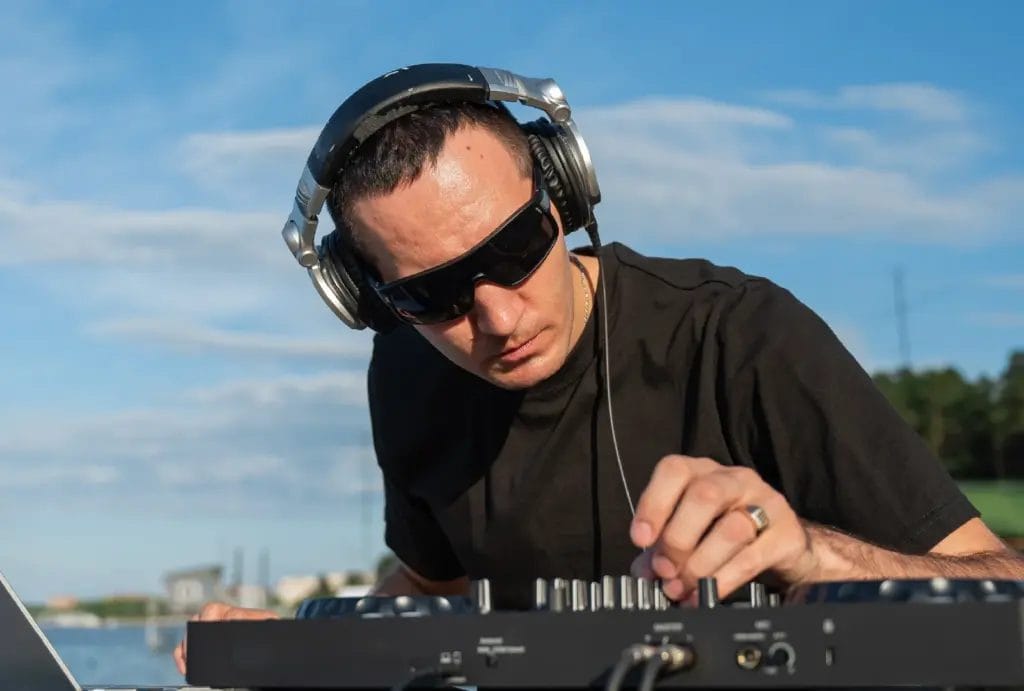
DJ equipment is the core of your business. But what’s the best gear for someone who’s just starting out? We asked a professional mobile DJ to weigh in and give his equipment recommendations.
Tip: While it may seem like a money saver to invest in the cheapest gear, you must balance affordability with quality. Check out The DJ Hookup, eBay, and Facebook Marketplace for deals on reliable equipment without breaking the bank.
Speakers
Speakers ensure your music and your voice carry across any audience size and room type, from parks to concert halls and ballrooms.
“JBL PRX 912. I swear by the JBL PRX line. But you can definitely get good-sounding speakers for cheaper. I bought one pair of used JBL PRX 615 speakers back in 2018 and have not needed to buy new speakers since. I’ve also known a lot of DJs to rent speakers from Guitar Center or other rental services to save up for a pair of their own.”
For more speaker recommendations, check out our best DJ speaker guide with recommendations from real DJs.
Mixers
Mixers serve as hubs for plugging in turntables, laptops, and other audio equipment. They also have volume controls with EQ knobs, faders, and crossfaders for smooth transitions.
“Yamaha MG10XU. Perfect for multiple sound inputs. You’ll want inputs for your controllers and mic. Oftentimes, the bridal party will want to have live performances, so it’s good to have the ability to help out with sound for singers, guitarists, or any other performers that your wedding might require.”
— DJ Jon Jon
Microphones
Mics are ideal if you’re MCing an event or need to make announcements over songs.
“Shure SM58. I have four of these mics in my setup. You should have two microphones. Anything you can afford will work, but these are the ones I saved up for. Also, make sure to have a mic stand. Any brand will work.”
— DJ Jon Jon
For more gear recommendations, check out our beginner’s guide to DJ equipment.
Lighting
Lighting, paired with the event’s theme, makes the atmosphere pop. Keep in mind, don’t go overboard, so you don’t overwhelm your audience.
“Go for what will look the best with the least amount of setup. Par lights are great to have around the room to set the mood during the event and behind your booth to light your facade during a dance segment. Light bars are the easiest thing to set up and to make look good with any setup.”
— DJ Jon Jon.
Other must-have DJ gear:
- DJ booth facades
- Speaker stand covers
- Gaffer tape
- Headphones
- Cables
Once you find the right gear, protect it with DJ equipment insurance. It’s designed to cover damaged or stolen tools during or while traveling to gigs.
Make Your DJ Business Official
After building your rig and boosting your skills, it’s time to set up the business side of things. Establish a fire DJ name, get your licenses (if applicable), and give your dream job the extra protection it deserves.
Choose a Business Name
Your DJ name defines who you are and the vibe you want to convey at every gig. Finding a DJ name doesn’t have to be stressful. Try these tips to find a name that works for you:
- Try puns, rhymes, and alliteration for catchiness
- Test out a name generator
- Use your state or hometown
- Ask for feedback from friends and family members
Make a Business Plan
According to BusinessDasher, 33% of business owners said they had a formal business plan. But why is it important? Think of a business plan as a master document that maps out every aspect of your business, from hiring staff to building out a services list. A solid business plan also helps you:
- Build a healthy budget
- Analyze competitors
- Create measurable goals
- Manage staff and finances
- Establish service prices
Get Your Business License
You usually don’t need a DJ license for most gigs. However, it’s wise to review industry requirements and local government regulations to ensure uninterrupted business operations.
Performance Rights Organization (PRO) License
A PRO license from ASCAP, SESAC, or BMI enables you to play copyrighted music in public, ensuring that artists, record labels, and songwriters receive their royalties. Most restaurant, club, and hotel venues have a PRO license, so you don’t have to worry about getting one, but be sure to ask beforehand.
However, if a venue doesn’t have a PRO license or you play in warehouses or private locations, you’ll have to buy your own. Check your catalog to determine whether you need an ASCAP, SESAC, or BMI license (or, in some cases, two or all three — which can be quite expensive).
Business License
A business license or permit is documentation from your local government that legitimizes your DJ business for taxes, operations, and revenue. These requirements vary by location, so it’s best to contact your local municipality to learn about requirements, fees, and applications.
It’s also essential to renew your license before the expiration date, ensuring your DJ business continues to operate uninterrupted.
Protect Your Career & Be Ready to Meet Venue DJ Insurance Requirements
Sometimes accidents happen — guests trip over cables or venue floors get scuffed. DJ insurance covers claims like these and meets venue requirements, so one unfortunate mishap doesn’t pause your career.
Plus, most venues and event planners require a DJ certificate of insurance (COI), aka proof of your coverage, before hiring you.
Some common insurance types you’ll need for your performances include:
- General liability: Protects you from third-party injuries (i.e. trip-and-falls), accidental venue damage, and non-physical harm, such as defamation and false advertising
- Gear and equipment: Optional add-on coverage for annual policies that covers your equipment if damaged or stolen during or while traveling to gigs
- Cyber liability: Optional add-on coverage for annual policies that covers retrieval, notification, and legal fees if someone hacks and steals your customers’ data
If you have three or more gigs a year, consider an annual policy starting at $18.50 per month for year-round coverage, along with the option to protect your gear and equipment. If you play one to three gigs a year, check out a DJ event policy, starting at $59, which provides up to three days of protection.
Did you know? Some venue owners and event planners may request that you add them to your policy as an additional insured. If a mishap happens, you and the venue owner could be held responsible. When you add them as an additional insured (upon request), they’re also protected.
Quick DJ Insurance Guide by Gig
Swipe →
| Gig type | Insurance requirements | Additional insured requirement |
|---|---|---|
|
Private or house party (<100 guests) |
General liability: ✅ |
Maybe |
|
Wedding or social event (100-250 guests) |
General liability: ✅ |
Yes (upon request) |
|
Club or bar residency |
General liability: ✅
|
Yes (upon request) |
|
Corporate or university event |
General liability: ✅ |
Yes (upon request) |
|
Outdoor community parties or festivals (500+ guests) |
General liability: ✅ |
Yes (upon request) |
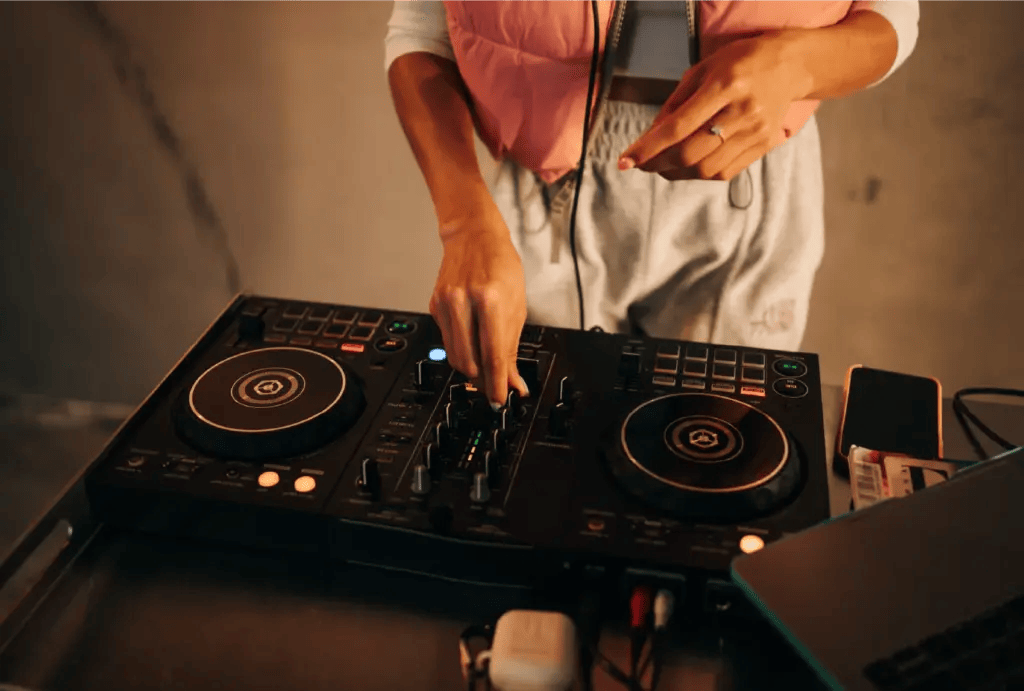
Book (& Work) Your First DJ Gig
You have solid playlists, insurance for the unexpected, fine-tuned gear, and a memorable DJ name. Now it’s time to turn your mixes into paychecks.
Give these tips a spin if you need some ideas to help you get started:
- Use a combo of friendly and professional outreach scripts for potential clients
- Network with local club owners and event planners
- Build social media pages and a Google Business Profile
- Create a website and add simple “Book Me” buttons
- Do public stunts to boost recognition
For more ideas, read our guide on landing more DJ gigs.
Create a Menu of DJ Services & Price Them
Before you can secure any gigs, you must set up your services and price them according to your experience, location, sets, and other business needs. We broke down some common DJ industries, average costs, and inclusions.
Quick Pricing Guide for Different DJs
Swipe →
| DJ niche | Average price ranges | Common inclusions |
|---|---|---|
|
Wedding |
$1,000-$2,500 |
Full sound and lighting, MC services, custom playlists, setup and teardown |
|
Corporate event |
$800-$2,000 |
Pro audio, lighting, branded playlists, event coordination |
|
Private party |
$400-$1,200 |
2 to 4-hour sets, basic sound and lights, custom playlists |
|
Festivals |
$1,500-$10,000+ |
Main-stage setup, rider compliance, pre-show prep |
|
Radio and livestream |
$50-$200/hour |
Music programming, mixing, streaming setup |
|
Club and bars |
$150-$500 |
2 to 4-hour performances, mixing, crowd engagement |
Key essential price-setting tips include:
- Review other DJ websites in your niche and how they price events and add-ons
- Develop event packages such as basic, standard, and premium
- Factor in event durations, locations, equipment usage, and experience levels
- Use add-ons like photo booths, fog machines, lighting set, and live streams
- Consider multiple pricing models such as flat rates, custom quotes, or hybrid tools
- Revisit and adjust for gear costs, inflation, and demand every 6-12 months
Create DJ Contract Templates
When you land your first gig, make it official with a DJ contract that highlights all the essentials. Below, we’ve broken down all the essential items you need for the DJ industry and why they’re essential.
DJ Contract Must-Haves
Swipe →
| Policy and lever | Why it’s important | Industry-normal setting |
|---|---|---|
|
Retainer to book |
Secures your gig date, filters out no-shows, and guarantees an upfront commitment |
25-50% nonrefundable |
|
Final payment due |
Prevents post-event collection issues and ensures payment before the performance |
7-14 days before the event |
|
Cancellation terms |
Protects your time and revenue from last-minute changes |
Client cancellations within 30 days may forfeit the deposit |
|
Overtime rate |
Keeps expectations clear and ensures payment for extra performance time |
1.25-1.5x hourly rate |
|
Travel fee |
Offsets gas, transport, and setup time for nonlocal gigs |
First 30-50 miles included; $1-$2 per mile beyond |
|
Force majeure/weather policy
|
Shields both parties from loss due to events beyond their control |
No penalties for events cancelled due to bad weather or natural disasters |
|
Payment methods |
Clarifies payment options and avoids confusion at payout time |
Card ACH, or cash; 3% card fee standard |
|
Insurance requirement |
Builds venue trust and protects you from injury or property damage claims |
General liability ($1M-$2M coverage) |
|
Equipment liability |
Protects you from repair or replacement costs if equipment is mishandled; Equipment and gear insurance may cancel out this clause |
Makes the client responsible if the crowd or venue damages your tools (unless you have gear and equipment insurance) |
You can also protect your business with safety checks and by using these precautions:
- Arrive early and inspect your setup area to ensure power sources are safe
- Secure your gear and booth with gaffer tape for loose cords or tip-prone gear
- Pack backup gear such as spare cables, adaptors, and laptops in case of damage
- Protect your hearing with safe volume levels and headphones
- Find your nearest exits in case of fire alarms, power surges, or crowd issues
- Keep your insurance active so you don’t have to use your profits for expensive claims
Show Up Ready: First Gig-Readiness Checklist (Free Download)
If you’re ready to transform your DJ hobby into a serious business, download our free gig-readiness checklist. This list covers everything from DJ contracts and choosing the right gear to safety-proofing your DJ booth, so you can tear the roof off (figuratively, of course) at every gig worry-free.

Common Questions About How to Become a DJ
Do I Need a License to Work as a DJ?
In most cases, no, you don’t need a DJ license because most venues have a Performance Rights Organization (PRO) license. However, if you do private shows, you may need a PRO license from ASCAP, SESAC, and BMI. You may also need a business license. Be sure to verify with your local government on the requirements and application process.
Do I Need Insurance if I’m DJing Part‑Time?
Absolutely! If you DJ part-time, you still need DJ event insurance to meet venue requirements, and because accidents can happen at any gig. For example, someone trips over one of your cords and sprains their ankle, or your DJ booth scuffs a venue’s floor. Our DJ event insurance starts at $59 and covers your part-time gigs for up to three consecutive days.
How Much Do DJs Make?
DJ income varies widely depending on where you spin, how often you play, and the type of gigs you book. Plus, factors like experience, location, credentials, and overhead expenses affect how much DJs earn.
Does DJ Insurance Cover My Gear?
DJ liability insurance alone does not cover your gear, but adding optional DJ equipment insurance to your annual policy protects your tools if damaged or stolen during or while traveling to gigs. Our coverage options are:
- $2,000 limit per year (+$7.50 per month)
- $5,000 limit per year (+$15 per month)
How Fast Can I Get a COI?
You can get a DJ COI instantly — right after you complete your application. And if you add an additional insured to your policy, we’ll send them a copy of your COI at no extra charge.
Why Do Venues Require DJs to Have Insurance?
Venues require DJ insurance because they want to know you’re ready for the unexpected. Their insurance only covers their side, so you need your own policy to handle accidents, venue damages, or injuries that can happen at any time before, during, or after a gig.