

The basic steps to create online personal training packages include starting with a package template, customizing it to your business, creating your content, pricing your package, and marketing it!
If your business to-do list looks like:
▢ Create personal training packages
▢ Start selling packages online
▢ Grow my training business
…then you’re in the right place. The easiest way to scale your in-person business to the online world is to start with a proven structure and customize it based on your training style. Discover three main models, ideas for what to include, and free templates to build your packages today!
Jump to:
➡️ Download Tiered Package Template
➡️ Download Category Training Package Template
➡️ Download Duration Training Package Template
Quick Guide: What Is an Online Personal Training Package?
An online personal training package is a plan or program you offer to clients for a fee. It includes tools, resources, and information to help clients achieve their fitness goals. Think PDFs, videos, gated websites, software access — or a combination of formats.
What Makes an Online Training Package Work
To make highly sellable online training packages, you must communicate the benefits of your offering and how they directly support your clients’ fitness journey. Take the methods you use to motivate, guide, and train clients in person, then adjust them to fit an online format.
The best packages are:
- Easy to understand
- Built around a clear goal or outcome
- Structured to keep clients consistent
- Simple to purchase and manage
- Highly benefits-focused
While the benefits of your training may be obvious to you, potential clients need to quickly understand what they can get out of your program to be motivated to buy. Call out outcomes such as:
- Better sleep
- More energy
- Improved mood
- Feeling stronger
- Feeling less hungry
- Improved confidence
- Enhanced muscle tone
- Clothes fitting better
Pro Tip
If you’re learning how to create personal training packages, it’s worth thinking about how you’ll protect your business, especially when offering workouts online. Personal trainer insurance is designed to cover you from client claims that happen due to in-person and virtual training, so you can focus on creating epic online packages without worry.
What to Include in Online Personal Training Packages
Your online personal training package should be tailored to how you support clients, but here are the basic elements to include.
- A program overview
- Weekly workout plans
- Live virtual workout sessions
- Explicit instructions (with modifications) on how to perform each exercise
- Visual (video or step-by-step images) exercise demonstrations
- Weekly or bi-weekly check-ins with live messaging support
- General nutrition or wellness habit guidance
- Appropriate privacy statements
- Liability and consent waivers
- Progress tracking
What your online package includes will be determined by how engaged you want to be, the format you choose (in-app, emailed, or paywalled website), plus your content types. For example, after purchase, a client can access your entire workout video library — or simply drop in on livestream sessions with other clients.
Remember: each client is unique. While you can use workout templates as a base, some clients need modifications. If you’re not creating customized workout plans for individual clients, make sure the preferred exercise alternatives are clearly identified or linked to.
Online Personal Training Packages Examples You Can Copy
Look at real-world package examples for inspiration — you’ll likely see patterns in the way popular providers structure their offerings. Some proven models for online personal training packages include:
- Category: Built around a specific goal, issue, or modality
- Pricing: Structured into priced tiers, such as basic, standard, and premium
- Duration: Designed into a specific time frame (sometimes toward a goal)
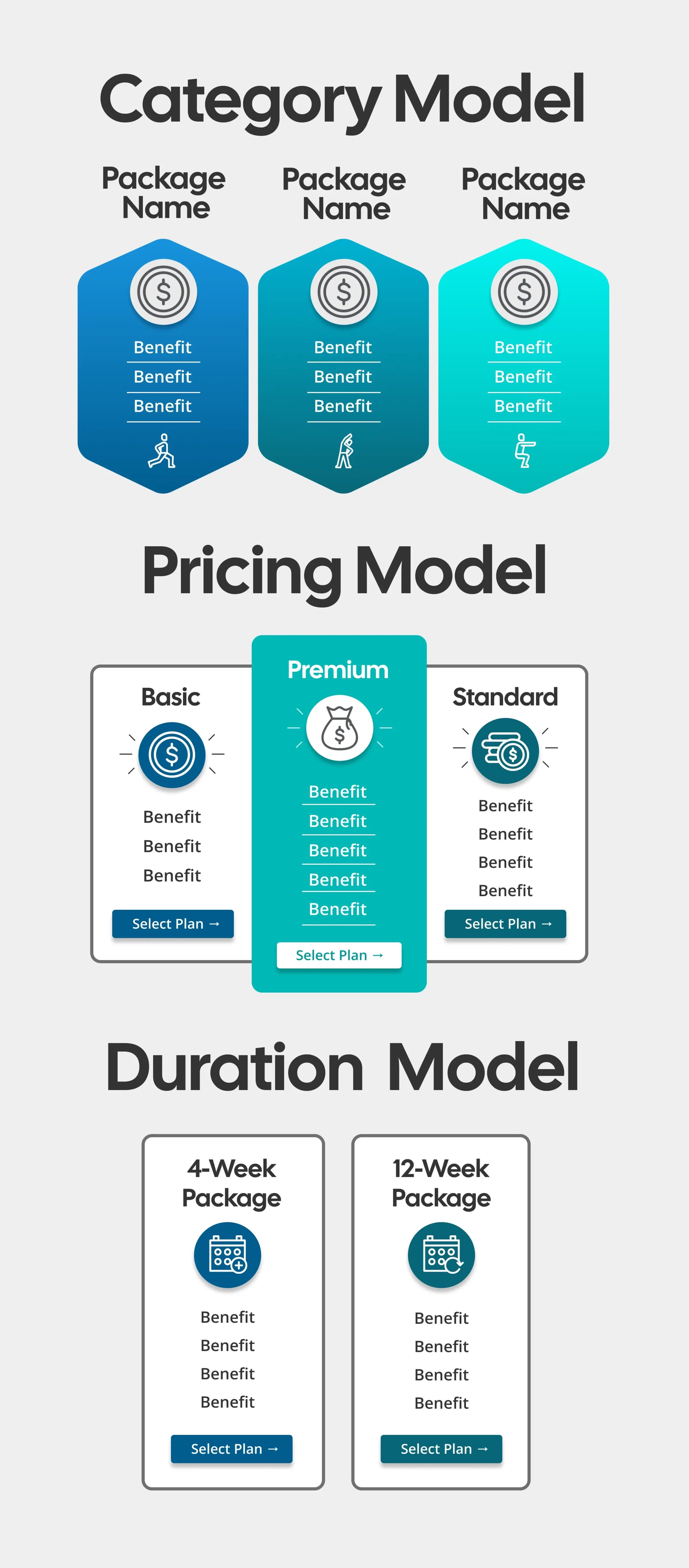
Category Package Model
A category-based package is based around achieving a specific goal, addressing an issue, or focusing on a modality. For example, you may offer strength training for women or marathon prep. Here are some examples.
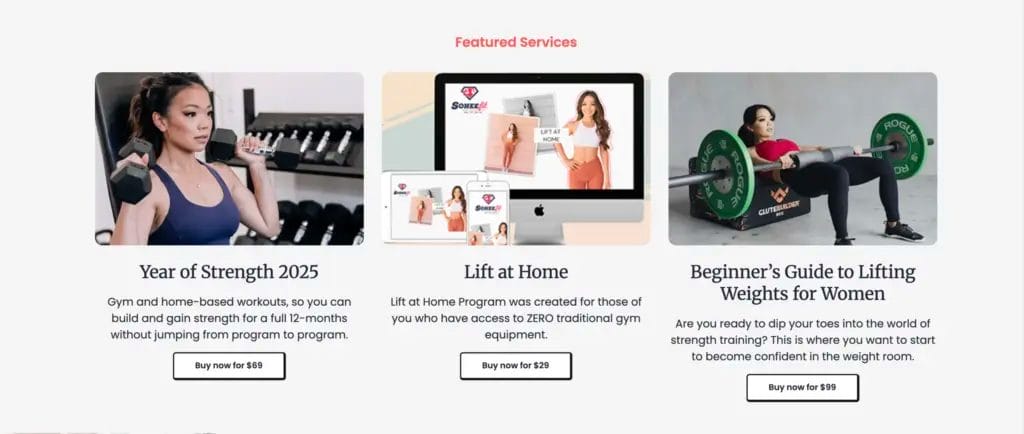
What this shows: Specific ready-to-buy programs tailored to potential clients’ needs, such as beginner’s lifting for women; includes training programs, instructional videos, and exercise demos.
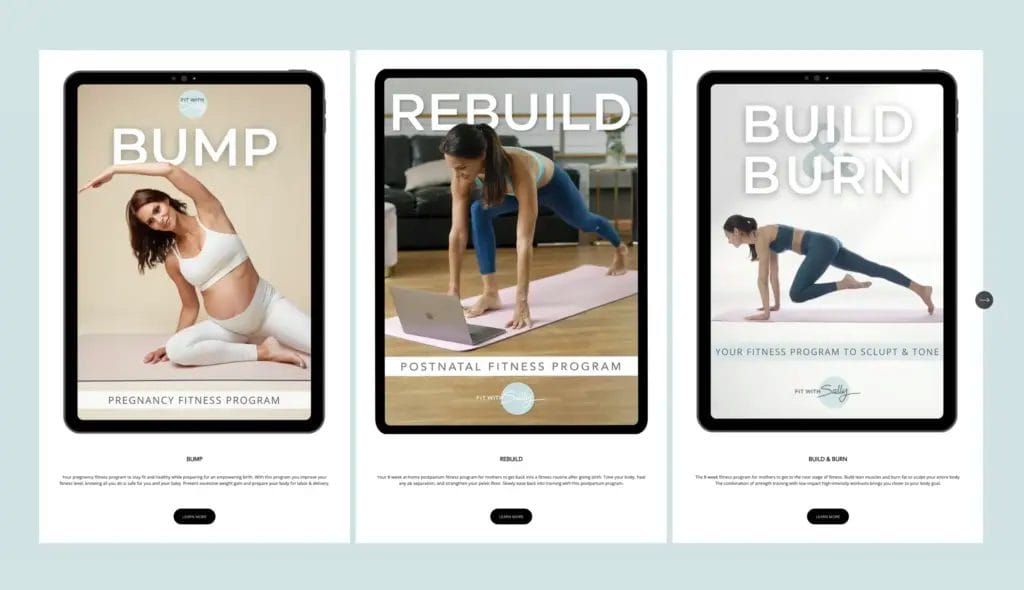
What this shows: Fitness programs that hone in on a specific audience niche: moms and moms-to-be; includes a program platform, workouts, meditations, and informational videos.
Pricing Package Model
The pricing package model starts with basic training and scales up to include more support in the higher tiers. For example, a basic package might include access to a workout plan, while a premium plan can offer one-on-one sessions and live messaging.
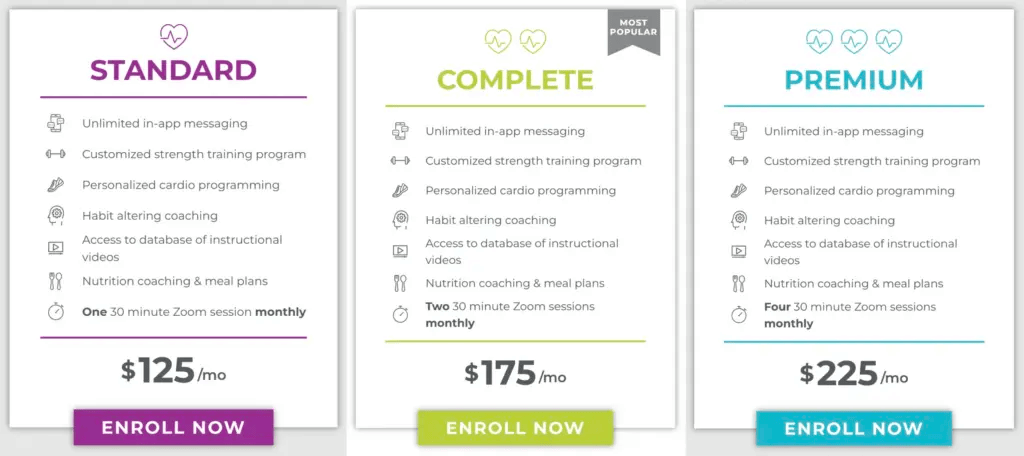
What this shows: A clear breakdown of benefits tied to pricing, so clients can choose what works best for their needs and budget.
Duration Package Model
The duration package model is designed around the time commitment required to complete them. They may work toward an end goal or can be more intense, accelerated programs.
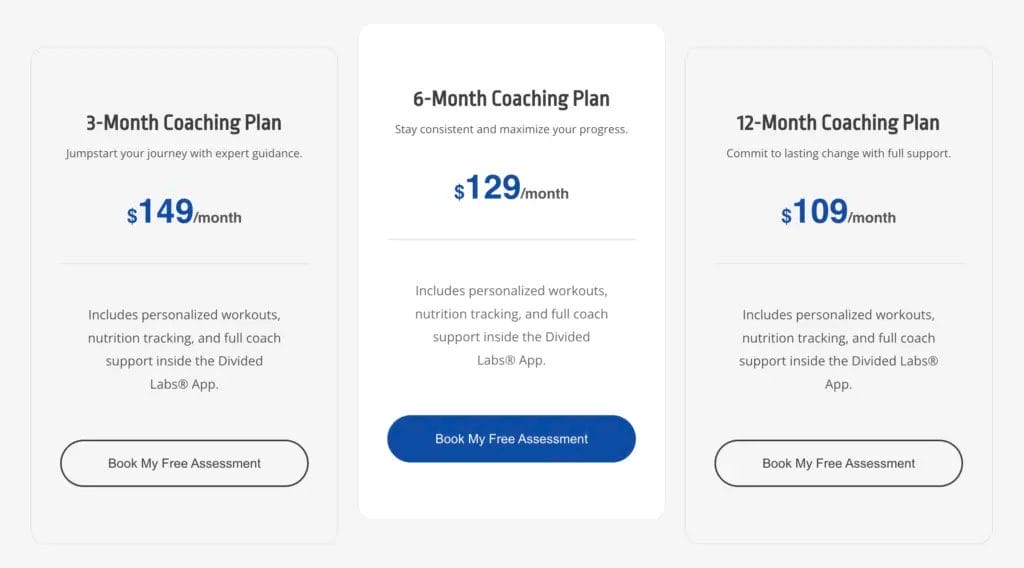
What this shows: Plans offered in three-, six-, and twelve-month durations, all with personalized workouts, nutrition tracking, full coach support, and app access.
How to Price Online Training Packages
Your package pricing depends on the level of support, access, content, and customization you offer. These are some ballpark ranges for package pricing — but always do your market research to see what competitors are offering!
- Low-touch “downloadable workouts only”: $50–$150/month
- Mid-tier “workout schedule + app access”: $150–$300/month
- High-touch “personalized workouts + live support”: $300/month
Factors that influence pricing include:
- Competitor pricing
- Your level of experience
- Your time commitment
- Your client’s time commitment
- Perceived value (i.e., what do clients receive from your expertise?)
- Discounts, such as introductory, seasonal, or other promotions
The more individual support and accountability your package offers, the more you can charge when pricing your personal trainer services.
Download Your Free Online Training Package Templates
Take a step toward becoming an online personal trainer. Download your free package templates. Here’s how to use them:
- Choose a structure that fits your business
- Customize what’s included (features, support, content)
- Prepare your content (i.e., create downloadable guides, video library, etc.)
- Set your pricing
- Share with clients
Pro Tip
When it’s time to market your online packages, a smart, simple way to boost client trust is by displaying your liability insurance badge on your website! It shows you’re a real pro who can handle unexpected issues if needed.
Get more tips like these: Fitness Marketing Ideas to Grow Your Brand.
Build Faster With Online Personal Trainer Resources
To deliver your packages efficiently, use tools and trainer-specific platforms. The best fitness trainer software can help you schedule, bill, and host videos and other content, so you can spend more time building and promoting your programs.
Some other resources to use to scale to online training are:
- Your website
- Printable documents like PDFs or Google Docs
- Video platforms (Zoom or FaceTime) for demos and calls
- Social media, like Instagram, for promotion and outreach
- Coaching and fitness apps
If you’re just starting out, an app like Trainerize enables you to take your training online without having to build a package from scratch.

Protect Your Training Business as You Scale
As your online training business grows (let’s go!), so does your responsibility. Whether you coach virtually or in person, accidents can happen. If a client suffers an injury while following your training package, you may be held liable. That’s why every personal trainer needs insurance.
Protect your business with personal trainer liability insurance from Insurance Canopy. Policies start from just $15/month with optional coverage for cyber liability to help you recover in case of a data breach.
From virtual workouts to in-person sessions, train confidently with a safety net of insurance in place. Plus, it’s a low-lift way to highlight your commitment to safety and client care as you take your business beyond the studio’s four walls.
FAQs About Creating Online Personal Training Programs
How Much Should I Charge for Online Personal Training?
When calculating your online training prices, factor in how much support, customization, and access you provide. Many online trainers charge anywhere from $50 for downloadable package content to $300+ for hands-on coaching. Start with a structure that matches your offering, then refine as you go.
How Much Do Online Personal Trainers Make?
According to ZipRecruiter, online personal trainer salaries average the same as in-person trainers, which is about $29.33 an hour.
Compared to in-person trainer salaries, virtual trainers generally have more flexibility and control over both their time and their prices, which can work to your advantage. On the flip side, compared to gym or fitness center-employed trainers, they are also responsible for running and promoting their businesses.
Are Online Personal Training Packages Worth It for Clients?
Online personal training packages can be very valuable for clients because they offer structured guidance and sometimes ongoing support, often for less than in-person sessions. The key is to clearly show what features are included and how they benefit your clients, so they know exactly what they’re paying for.
What Is the Best Length for an Online Training Package (4, 8, 12 Weeks)?
4-week programs are great for getting a quicker start in online training (less programming to prepare). However, longer programs, like 8–12 week programs, allow a greater chance for clients to achieve noticeable progress. They also help support long-term habit-building.


